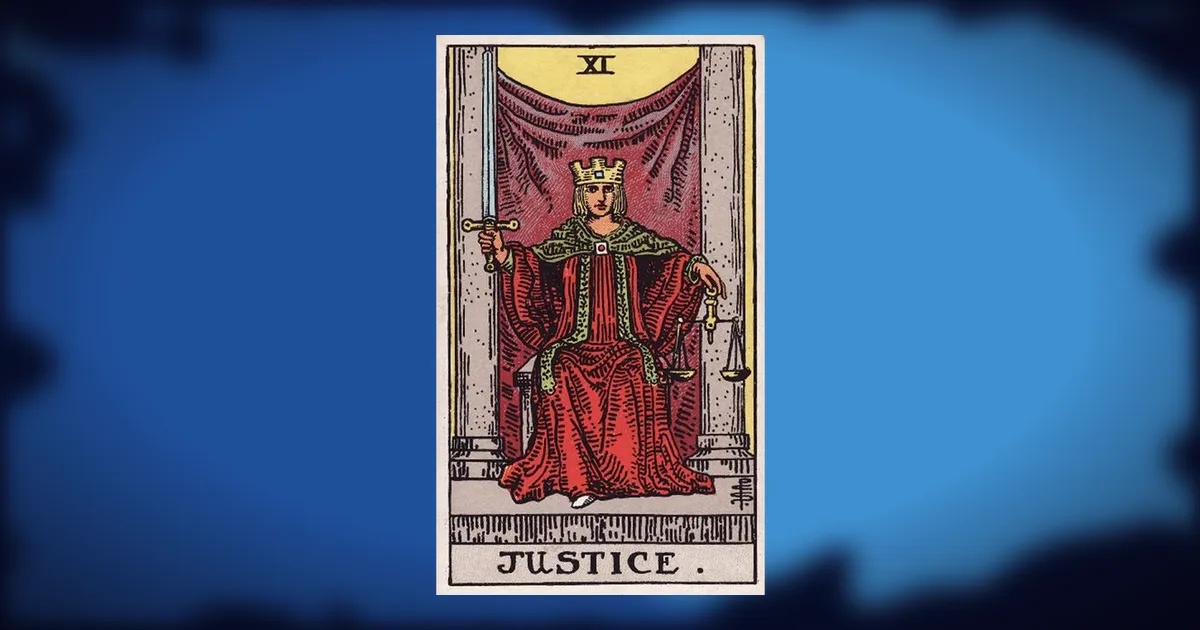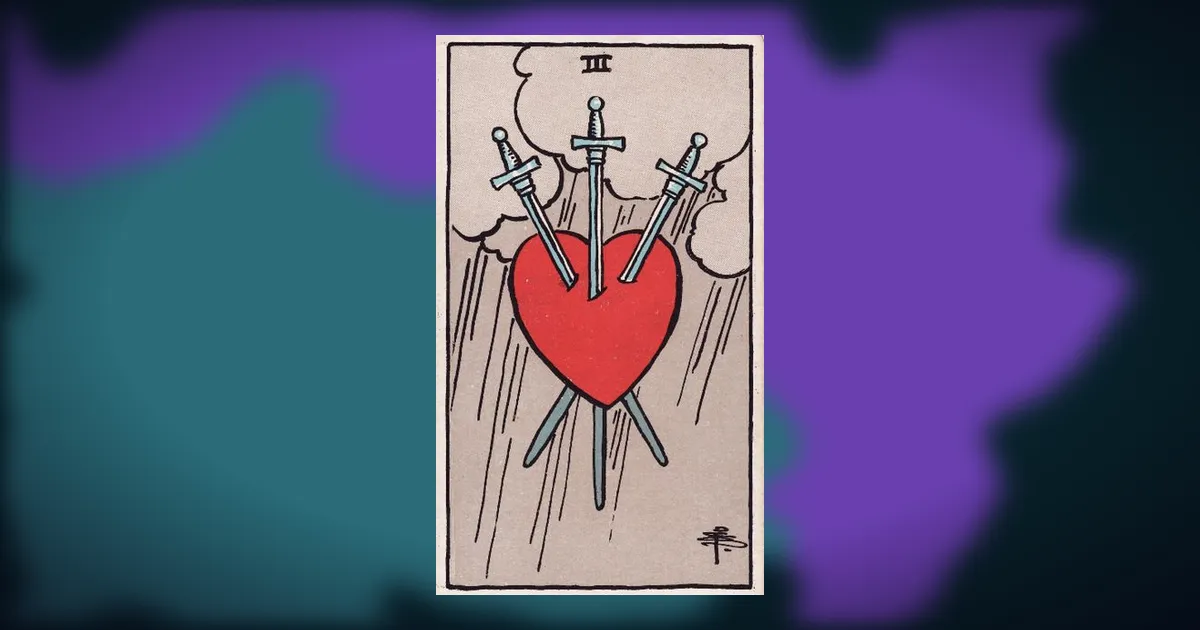
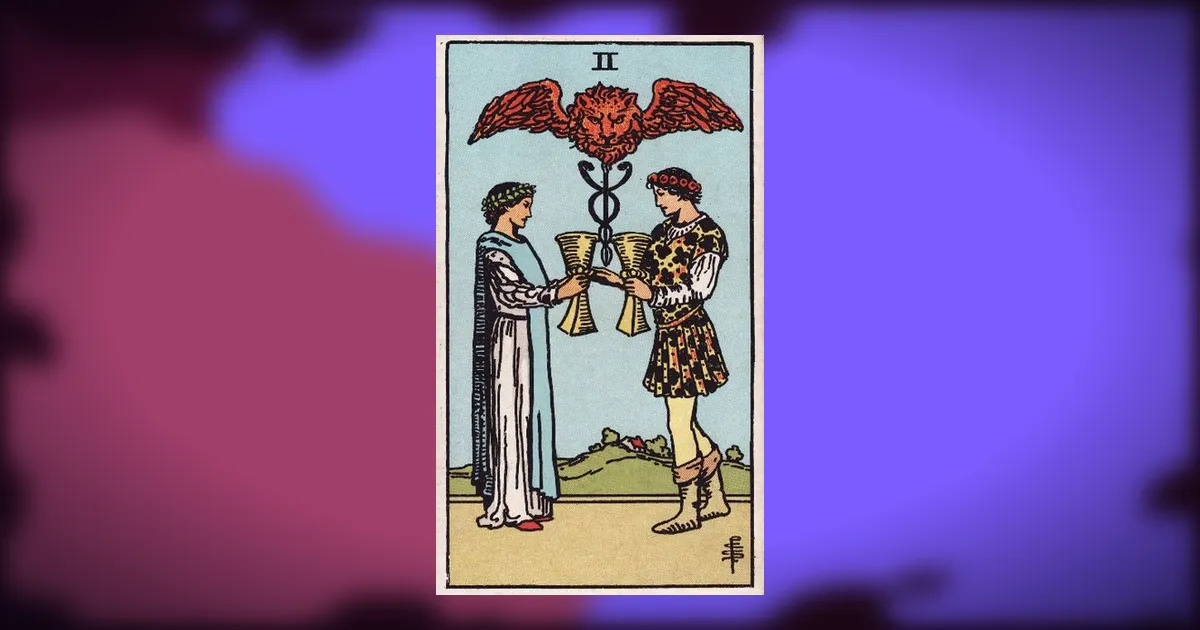
A love and relationship spread is the most common reason people turn to the tarot. We want to understand what we don't dare ask outright: what our partner feels, whether to make the first move, whether the couple has a future, and why things have gone off between us. This detailed guide takes it in order: which spreads suit which question, which cards speak of mutuality and harmony and which are a signal to stop and think, how to frame a question so the answer is honest — plus a step-by-step example of a real three-card reading and the typical mistakes that stop people hearing the cards properly.
Why love is the biggest subject in tarot
Relationships are built so that we almost never see them from inside the other person. We invent their motives, worry about a silence in the chat, reread messages hunting for hidden meaning. A love spread doesn't read someone else's mind literally — it helps you look at the situation honestly from the outside, strip out the emotional noise and see a pattern that's hard to notice from inside your own feelings.
One thing is worth stating up front: tarot is a tool for self-reflection and likely scenarios, not a prediction machine with a hundred-per-cent guarantee. The cards won't charm a partner into loving you and won't decide for you whether to stay or leave. They show the energy of the situation here and now and where it's heading given the current balance of forces — the choice after that is always yours.
Choosing a spread for your question
Before you shuffle, work out what you actually want to know. The phrasing of the question determines both the choice of spread and the precision of the answer.
| Spread | For what question | What it shows |
|---|---|---|
| Love | “What's ahead for me in my personal life?” (including when you're single) | The general romantic background, what to prepare for, what to watch |
| Relationships | “What's happening between us and where are we heading?” | You, your partner, the couple's outlook — the full picture of the union |
| His / Her feelings | “What do they feel for me?” | A particular person's thoughts, feelings and intentions |
| Yes/No | A short closed question: “Should I message first?” | A quick, unambiguous marker without the detail |
| A past relationship | “Will they come back? Should I go back?” | The reasons for the break-up, where your ex is now, the outlook |
If you're a beginner and unsure which spread fits, start with something shorter and more general — three cards on the relationship, say — and move to fuller techniques like the Celtic Cross once you feel more confident with interpretation.
Cards that speak of mutuality and harmony
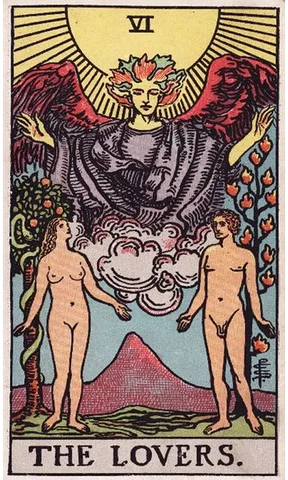
The Lovers — union and conscious choice
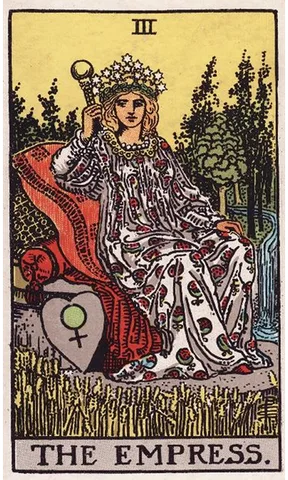
The Empress — tenderness and abundance of feeling
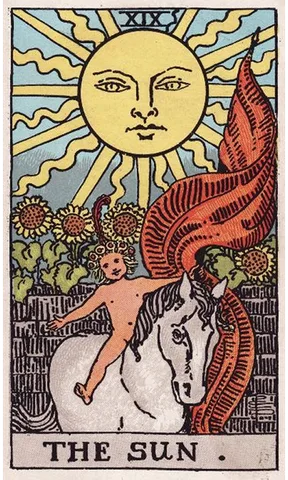
The Sun — open joy and harmony
Some cards read as a good sign in almost any love question. The main ones:
- The Lovers — a deep emotional bond, a conscious choice of one another, a union of equals;
- The Two of Cups — mutuality, an exchange of feeling, partnership on the same wavelength;
- The Empress — tenderness, care, abundance of feeling, the wish to build a shared warmth;
- The Sun — open joy, ease in each other's company, happiness without masks;
- The Ace of Cups — the start of new feeling, emotional opening, readiness to let love in;
- The Ten of Cups — domestic happiness, harmony at the level of home and a shared future;
- The World — a complete, harmonious stage in a relationship, a sense of wholeness together.
Note that even a “good” card is read in context. The Two of Cups in the “past” position tells you the bond existed; it doesn't guarantee it in the future. Full interpretations of every card are in our tarot meanings reference.
Cards that signal difficulty
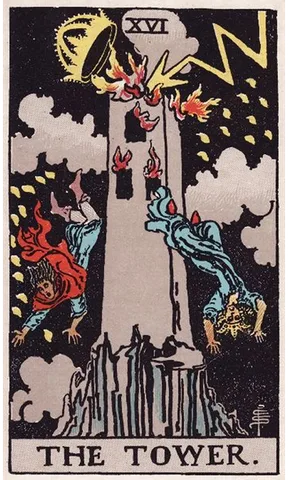
The Tower — illusions breaking abruptly
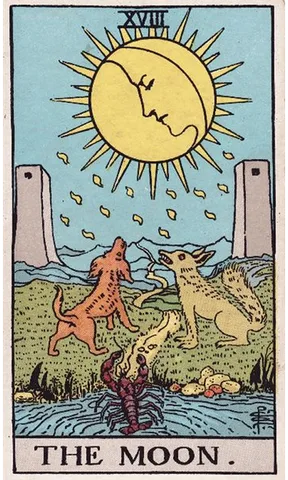
The Moon — things unsaid, and anxiety
The “difficult” cards frighten people most in a love reading, but there's no need to panic over them — they point to what needs work rather than closing the book on a relationship:
- The Tower — an abrupt collapse of illusion, a crisis that in fact frees you from something held together by self-deception anyway;
- The Five of Cups — regret, focusing on the loss instead of what's still there;
- The Three of Swords — pain, disappointment, a sense of betrayal or sharp jealousy;
- The Moon — things unsaid, illusions, a partner (or you) not voicing something;
- The Eight of Cups — emotional withdrawal, the wish to leave what has stopped filling you up;
- The Devil — dependency, toxic attachment, a relationship held together by fear rather than love;
- The Ten of Swords — rock bottom, a sense of total ending — and equally a signal that the only way from here is up.
Mira often reminds people: the cards aren't punishing you or trying to frighten you. A heavy card isn't a verdict but an honest mirror — one you don't always want to look into, but it helps.
How to frame a love question
Half the accuracy of an answer comes from how the question is phrased. A vague question almost always produces a vague interpretation that clarifies nothing.
- Avoid broad phrasings. “What will happen with us?” is too wide. Better: “What's stopping our relationship from developing right now?”.
- Ask about your own sphere of influence. Instead of “will they fall in love with me?” — “what can I do to make our relationship stronger?”.
- Ask about the present, not an abstract future. “What do they feel for me now?” works better than “what will things be like in a year?”.
- One question, one spread. Don't mix love with work or money questions in a single reading.
- Be ready to hear any answer. If you've already decided what the result should be, there's a strong risk of bending the interpretation towards what you want instead of seeing the real picture.
Examples of good questions: “What does this person feel for me right now?”, “What's keeping us from getting closer?”, “What should I pay attention to in this relationship over the coming month?”, “Should I make the first move?”.
A step-by-step three-card relationship spread
Here's a real reading that's easy to repeat yourself.
The question: “What's happening between me and this person, and where is our relationship heading?”
Positions: 1 — me in this relationship, 2 — my partner, 3 — the couple's outlook.
The cards drawn: the Empress (upright) — the Seven of Cups (upright) — the Two of Cups (upright).
- Position “me” — the Empress: you're genuinely invested, ready to care, to create warmth and comfort; your stance is open and generous;
- Position “partner” — the Seven of Cups: this person currently has a lot of options and doubts in their head; they may not have fully made up their mind, or they're distracted by illusions instead of an honest choice;
- Position “outlook” — the Two of Cups: and yet the potential for real mutuality is there — the card speaks of a possible partnership of equals, if your partner can bring their focus down to one option.
Reading it as a whole: you're investing sincerely and heavily (the Empress), your partner is still in the fog of too many thoughts and hesitations (the Seven of Cups), but the prospect of a mutual, equal bond is real (the Two of Cups) — provided they make up their mind. The right move here isn't to press or force an answer but to give them time while continuing to be yourself.
Note how no single card in this spread acts as a final verdict: it's the combination of positions and cards that gives the full, honest picture. If you'd like to look at that mechanic in more detail, see the article “How to read tarot”.
A spread on one person's feelings
Another common request is to find out what a particular person feels, rather than the general dynamic of the couple. For that the “His / Her feelings” spread is better, across three positions: thoughts — emotions — actions. It shows not just your partner's mood but whether they're ready to turn feeling into actual steps.
An example: on the question “what do they feel for me?” you draw the Two of Cups (thoughts), the Knight of Cups (emotions), the Page of Pentacles (actions). The reading: they think of you as an equal partner, feel genuine romantic interest and are willing to court you, but they're acting cautiously, step by step, without hurry. The upshot — the interest is mutual, but this person isn't rushing things.
If your question is about a particular man and his intentions, there's a detailed breakdown of cards and examples in the article “A reading about a man”.
A relationship spread when there's no relationship yet
A love spread isn't only for existing couples. If you're single and want to understand what's ahead in your personal life, use the more general Love spread: it shows the overall emotional background, what you're inwardly ready for and what might be worth changing in yourself to let a relationship in. That reading works better framed not as “when will I meet them?” but as “what's important for me to understand about myself before a new relationship?”.
Typical mistakes in love readings
- Re-reading. Asking the same question several times in a row hoping for a different answer is the most common mistake. The first honest spread is usually the most accurate one.
- Reading in acute anxiety or hurt. At emotional boiling point it's easy to “see” in a card what you want to see rather than what's there.
- Vague questions. “Will we be together forever?” is all but guaranteed to give a foggy answer — narrow the question to a specific situation.
- Reading for another person without cause. Constant spreads about the same partner with no new circumstances only feed anxiety instead of clarifying anything.
- Ignoring unwelcome cards. Skipping past a difficult card means losing the most useful part of the answer: the hint about what to change.
How combinations change a love reading
As in any spread, cards in love questions affect one another. The Tower next to the Star isn't “the end of the world” but “a painful collapse of illusion followed by healing”. The same Tower next to the Devil is a far more worrying signal: the relationship may be held together by fear or dependency, and a break-up would be a release. There's more on reading cards together rather than separately in the section on tarot card combinations, and the basic meaning of each card is in the article “The meaning of the tarot cards”.
Watch the card's orientation too — upright or reversed. A reversed Two of Cups can speak of an imbalance in what each partner gives, and reversed Lovers of doubt about the choice. If reversals confuse you for now, it's perfectly fine to read upright meanings only at the start — there's more on this in the article “Reversed tarot cards”.
What to do if the reading showed a difficult picture
Sometimes the cards' honest answer isn't what we hoped to hear. If heavy cards dominate a spread, that's a reason not to panic but to ask yourself a few calm questions: what exactly in the relationship is producing this energy, is there a conversation you're putting off, and what's genuinely in your power to change right now. Tarot is good at showing the diagnosis, but the treatment is always a real conversation and concrete action, not repeat readings in hope of a different result.
If a short spread doesn't feel like enough and you want a fuller picture — the causes, the hidden obstacles, the likely outcome — move on to fuller techniques like the Celtic Cross. A ten-position spread suits exactly the tangled, layered relationships where one to three cards won't do.
A love reading online — with a live interpretation from Mira
You don't need a deck to hand or dozens of meanings in your head. You can do a relationship reading online right now — it's free and takes a couple of minutes. And if you want more than the cards themselves — a warm, personal interpretation for your particular situation — put the question to Mira in the bot: she'll shuffle honestly, draw the spread and explain in words what's happening between you and what to do next.
→ Open the bot and ask Mira about your relationship
Frequently asked questions
Can you read about a specific person without their knowledge?
Yes, that's standard practice. It's enough to hold that person in mind as you frame the question. The “His / Her feelings” spread is built for exactly this and doesn't require the partner's consent — you're reading your own situation, not interfering with someone else's will.
How often can you do a relationship reading?
No more than once per question. If the circumstances haven't changed, a repeat reading won't give a new answer — it'll only feed anxiety and the temptation to bend the interpretation towards what you want.
What should you do if “bad” cards come up?
Take them as an honest mirror, not a verdict. Such cards show what needs work — trust, honesty, fears — they don't forbid you to feel or to love.
Can you do a reading about a relationship that doesn't exist yet?
Yes — the general Love spread suits that. It shows the emotional background and your inner readiness for a new relationship rather than a specific person.
Is it worth reading about an ex?
You can, if the question is specific: why the break-up happened, what your ex feels now, whether to resume contact. There's a dedicated past relationship spread for it.
Why do different cards come up for the same question on different days?
Because the situation and the energy around it change. Tarot reflects the state of things here and now rather than a fate fixed once and for all — so yesterday's answer and today's can differ if something in the relationship has shifted.
How accurate are love readings?
Tarot shows a likely scenario given the current balance of forces, not a hard prediction. Accuracy is higher when the question is specific and you're ready to look honestly at the answer, even if it doesn't match your expectations.