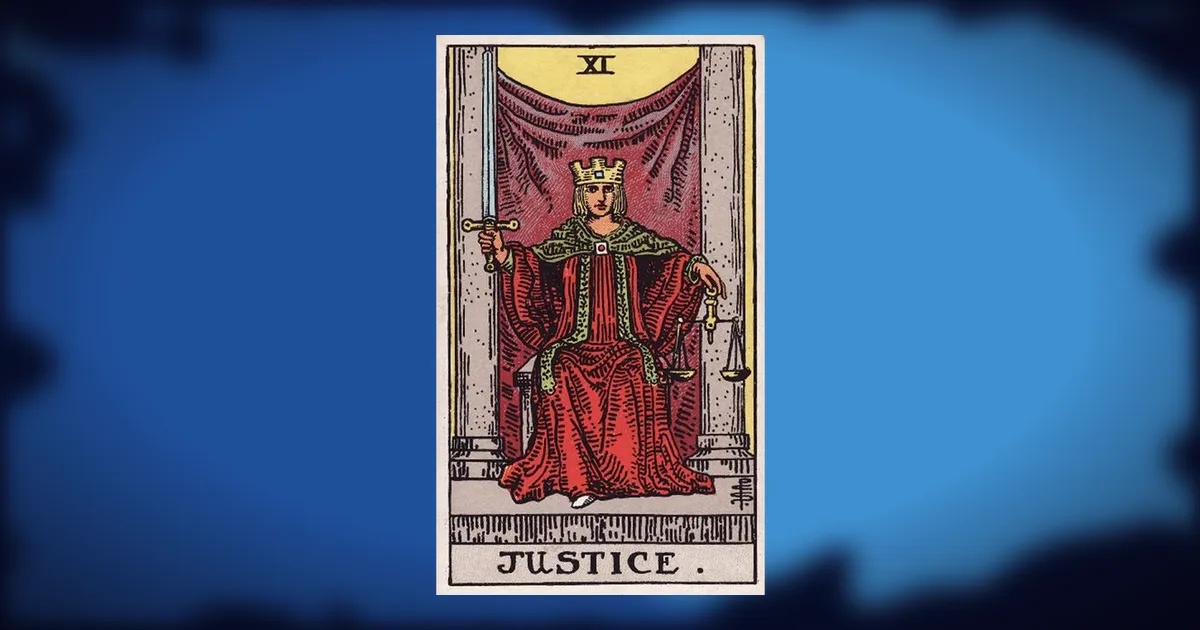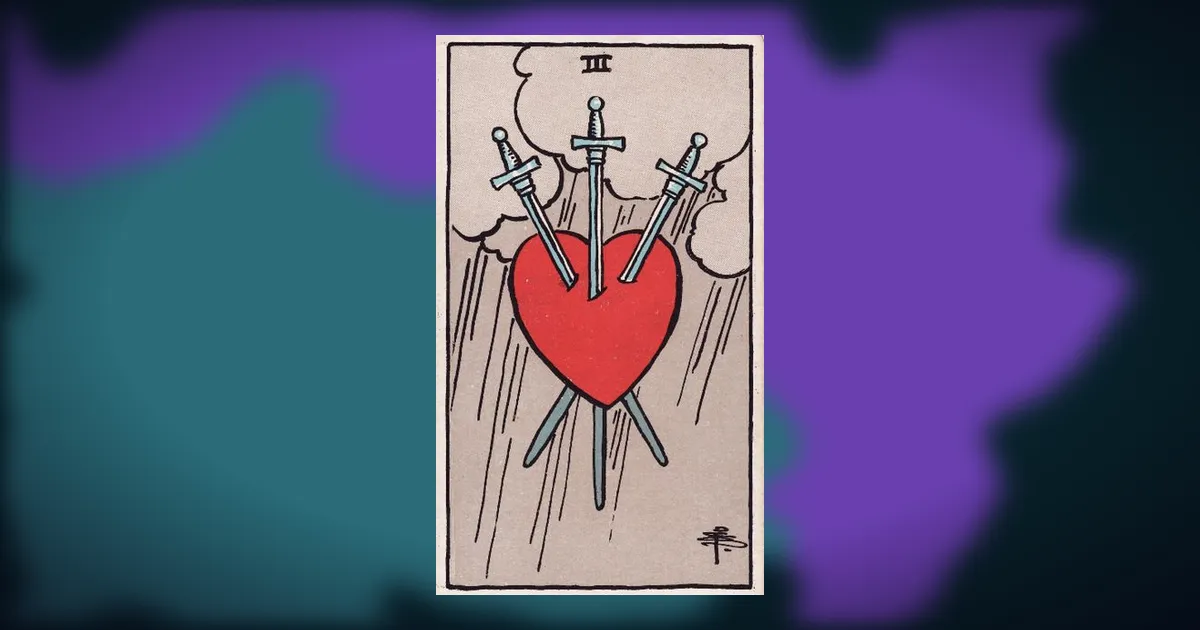
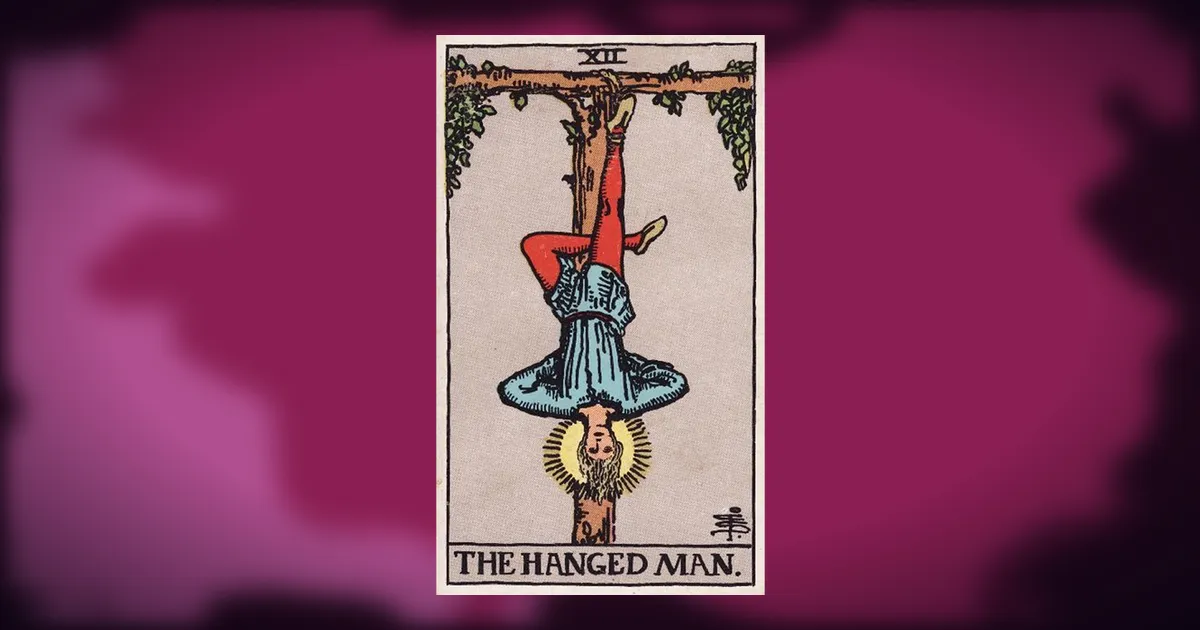
When a reversed tarot card turns up in a spread, something tightens in a lot of people — as if the card had “broken” or were carrying obviously bad news. In reality a reversed position is neither a verdict nor an automatic minus, but a separate layer of meaning that can be read in several different ways: as a weakening of the energy, as a block on the way to the result, as an inward, hidden version of the same theme, and sometimes as outright relief from a heavy card. This guide covers what a reversed position means at all, the three main approaches to reading it with examples, several specific cards run through those approaches, an honest answer to whether you need reversals at all — and the technical side: how to shuffle if you want to work with reversed cards, or how to avoid them if you don't.
What a reversed position actually means
A reversed card is one that lands upside down relative to the person looking at it: the image is rotated 180 degrees. In itself that's a purely mechanical event — the card was lying one way up in the deck and could have been lying the other, and which way it comes out depends on how you shuffled. The question isn't physics, it's what meaning you decide to put into it.
Historically, reversed cards didn't become part of the tarot tradition straight away — in the old French and Italian systems reversals were either not used at all or read very simply, as a “minus” applied to the meaning. Modern practice, which took shape in the 20th century around the Rider–Waite deck, is far subtler: a reversed position today is usually understood not as a hard “no” or “bad” but as one of several possible shades of the same card's theme. Upright and reversed aren't two different messages; they're the same story on the card seen from different sides — outside and inside, at full strength and muted, freely and against an obstacle.
That's exactly why experienced readers never read a reversed card in isolation from its upright meaning — you first have to be clear about what the card is about in principle, and only then lay one of the reversal shades over that understanding. The basic upright meanings of all 78 cards are handy to keep to hand in the tarot card meanings reference: the reversal almost always follows logically from them once you know the pattern.
Three main approaches to reading reversed cards
Different schools and different readers approach reversals differently, but most interpretations come down to three basic models. The good news: you don't have to choose one for life — experienced readers switch between them flexibly depending on the card and the context of the question.
1. The opposite of the upright meaning
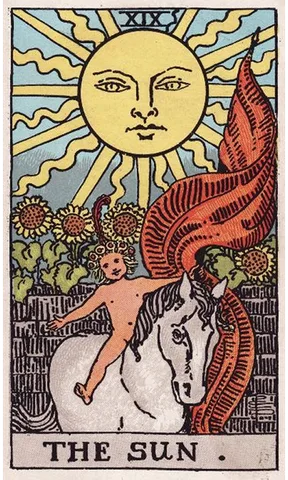
The simplest and oldest approach: a reversed card means the direct opposite of the upright meaning. If the Sun upright is joy and success, then by this logic the reversed Sun is sadness and failure. The approach is intuitive and works well for cards with a clear light/shadow pair, but it has a weak spot: not every card has a literal opposite that can be stated easily and honestly, and applying the rule mechanically to all 78 cards sometimes produces strained, unnatural readings.
2. A weakened or blocked version of the same meaning
A more flexible approach and probably the most widespread today: a reversed card doesn't flip the theme to its opposite but shows that the card's energy is present and isn't being realised at full strength — it's weakened, delayed, blocked by outside circumstances or by the person's own hesitation. Reversed Strength isn't “weakness” as an opposite but strength held with difficulty: the resource is there, but the person doubts themselves or is tired of holding on. This approach often turns out to be more accurate and gentler than the first, because it doesn't require inventing an artificial opposite where there isn't one.
3. The inner, hidden aspect of the same theme
A third, more psychological approach: a reversed card shows that the card's theme is unfolding not in the outer world but inside the person — as a thought, a feeling, an inner process not yet expressed outwardly. The upright Empress is care and abundance visible to everyone around; by this logic the reversed Empress is care for oneself, an inner sense of one's own worth that hasn't yet been expressed through action. This approach is especially useful in readings about feelings, self-esteem and inner processes, where a literal “opposite” would sound too harsh and imprecise.
Card by card: how the same reversal reads differently
To stop the three approaches being an abstraction, let's take a few specific cards and show how their reversed meaning can sound depending on the model you choose.
| Card | Upright meaning | Reversed meaning |
|---|---|---|
| The Sun | Joy, success, clarity, self-confidence | A temporary dip in mood, joy postponed, success delayed |
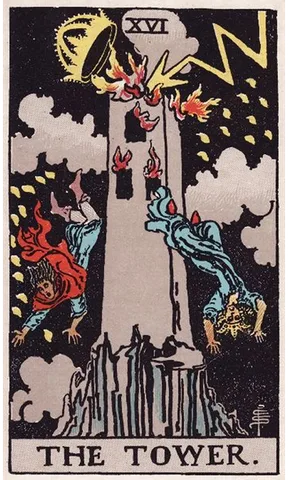
| The Tower | Sudden crisis, the old destroyed, shock realisation | The crisis was avoided or passes more gently; fear of change that keeps you stuck |
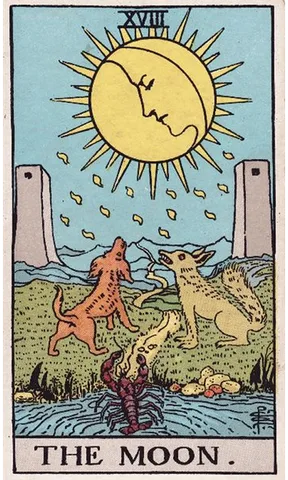
| The Moon | Anxiety, illusion, intuition, an unclear situation | The anxiety recedes, the fog begins to lift; or, conversely, self-deception deepens |
| The Star | Hope, inspiration, healing, trust in the future | A temporary loss of faith in yourself, weariness from waiting, hope present but muted |
| The Lovers | A harmonious choice, union, attraction on shared values | Doubt about the choice, imbalance in the couple, a decision put off |
| Strength | Confidence, gentle mastery of yourself, passion tamed | Self-doubt, emotional exhaustion, strength that's there but hard to hold |
Note that the reversed Tower reads rather positively in this table — as relief rather than a deepening crisis. That's a good illustration that a reversal doesn't mechanically equal a minus: for “heavy” cards a reversed position often means the worst won't happen or is already behind you, while for “bright” cards it means their energy is temporarily muted. You can check the logic of any specific card, reversal included, in the tarot card meanings reference.
A worked example: how a reversal changes a reading
Take a practical case. A relationship question — “What's happening between us right now?” — and the reversed Two of Cups comes up.
The upright Two of Cups is mutual feeling, partnership, harmony between two people. Apply all three approaches to its reversed position:
- As an opposite: discord, misunderstanding, mutuality in question;
- As weakening or a block: the mutuality is broadly there, but something stops it showing at full strength — things left unsaid, distance, fear of making the first move;
- As an inner aspect: the feeling exists but hasn't been voiced — one of the two hasn't yet dared to say it out loud.
As you can see, all three readings are different, but none of them says “it's over” — and that matters. In most cases the neighbouring cards and the substance of the question itself suggest which of the three is closest to reality. If a card of delay or obstacle is next to it, the second reading is more likely; if a card connected with inner life and feeling is next to it, the third.
A reversed card isn't a different message — it's the same story told more quietly, from the inside, or with a catch in it. Learn to hear that shade rather than fear it.
Can you simply not use reversed cards?
Yes, and it's an entirely normal, widespread practice. Many readers — including experienced practitioners with years behind them — read cards upright only and deliberately don't work with reversals at all. This isn't “incomplete” tarot or a lazy simplification: it's a considered methodological choice that simply removes one level of complexity from an already dense system of 78 meanings.
It's especially sensible for beginners. While you're still shaky on the upright meanings, adding reversals noticeably increases the cognitive load: instead of 78 meanings you're effectively holding 156 in your head. The best strategy at the start is to get properly comfortable with the upright meanings in practice (through a daily Card of the Day, for instance, described in detail in the article “How to read tarot”), and only then, once the upright meanings feel like your own, gradually introduce reversals as an extra layer of depth.
How to decide whether to read reversals
There's no single right answer here — it's a question of personal style, not a strict instruction. But there is a practical way to decide, rather than a theoretical one.
Step 1. Master the upright meanings
Before adding reversals, make sure the upright meanings are fluent for you — that you aren't reaching for a cheat sheet on every card but recalling its essence from the image.
Step 2. Practise on your own readings
Take your deck, shuffle it so cards do turn over (see below), and do simple spreads on clear, familiar situations — the day just past, say, or a question you already know the answer to. That's the easiest way to notice whether reversals add real depth to the reading or just confuse and slow you down.
Step 3. Listen to how it feels
If working with reversed cards feels like a natural extension of meaning, keep it in your practice. If it feels more like an extra barrier between you and understanding the card, don't force it — read upright only. Both options are equally legitimate.
The technical side: how to shuffle
There's a simple mechanic to understand here: cards only end up reversed in the deck when your shuffling method physically allows it.
If you want to work with reversals
Shuffle so that some cards periodically turn over — with a riffle shuffle, where the two halves of the deck interleave, or simply by turning part of the stack 180 degrees now and then as you shuffle. Over time the deck naturally accumulates a mix of cards facing both ways, and both upright and reversed cards will come up at random in a spread.
If you don't want to work with reversals
Equally normal and valid — just make sure every card in the deck always faces the same way. Shuffle by a method that doesn't flip cards wholesale (a simple cut, moving part of the deck from top to bottom without turning it), and check periodically that all the cards face the same direction. Then only upright meanings will come up and you won't have to hold reversals in your head at all.
Both technical approaches work; neither is “more correct” than the other. The choice depends entirely on whether you've decided to include reversed cards in your practice.
Common beginner mistakes with reversals
- Treating a reversal as bad news automatically. As shown above, a reversed Tower or Moon often sounds gentler than the upright meaning, not heavier.
- Ignoring the context of the spread. The same reversed card in different positions and beside different neighbours can mean something completely different — reading it in a vacuum is often simply wrong.
- Sticking rigidly to just one of the three approaches. Applying “reversed = opposite” mechanically to every card without exception produces strained readings that don't ring true.
- Feeling embarrassed about skipping reversals. Some beginners feel like “incomplete readers” if they don't use reversed cards. They're not — reading upright only is no worse at all.
- Retrofitting intuition onto a reversal. If a card doesn't come together reversed, don't force the meaning to fit — sometimes it's enough to note the card's general theme without extra detail.
Lay out cards online with positions taken into account
Understanding the three approaches to reversals is the foundation, but a live reading of a specific spread, with the neighbouring cards and the substance of your question factored in, is always more precise than any table. If you'd like a reading where each card's position — upright or reversed — is accounted for and explained in words, put your question to Mira in our bot: she'll draw the cards and go through what each one means in your particular situation.
→ Open the bot and get a reading with card positions explained
Frequently asked questions
Do you have to account for reversed cards?
No. You can read upright meanings only — that isn't a mistake or a simplified version of tarot. Many experienced readers work with upright cards on principle. Reversals add depth, but they're worth taking on only once the upright meanings feel familiar.
Does a reversed card always flip the meaning to its opposite?
No. That's just one of three main approaches. More often a reversed position is read as a weakening, a block, or an inner aspect of the same theme not yet expressed outwardly, rather than a hard opposite.
Is a reversed card always a bad sign?
No. For “heavy” cards such as the Tower or the Ten of Swords, a reversed position often means relief — that the crisis passed more gently or the worst is already behind you. For “bright” cards a reversal more often means a temporary weakening or a delay.
How do you know which of the three approaches to apply to a given card?
Lean on the neighbouring cards and the substance of the question. If a card of obstacle is next to it, “block” is more likely; if the question is about inner experience, “inner aspect”; if the card has a clear pair of opposed meanings by nature, the direct opposite is worth considering too.
Do you need to shuffle specially so that cards turn over?
Yes. If you want to work with reversals, shuffle with a technique that flips some cards (a riffle shuffle, for example). If you don't want them, keep every card in the deck facing the same way.
Where's the better place to start — upright meanings or reversals straight away?
Upright meanings. Get comfortable with each card's basic meaning through practice, such as a daily Card of the Day, and only then gradually add reversed positions as an extra layer.
Can part of a spread be read upright and part reversed?
Yes — that's exactly how it works: each card's position is determined by how it fell during the shuffle, so upright and reversed cards naturally mix in a single spread if you've chosen to work with reversals.