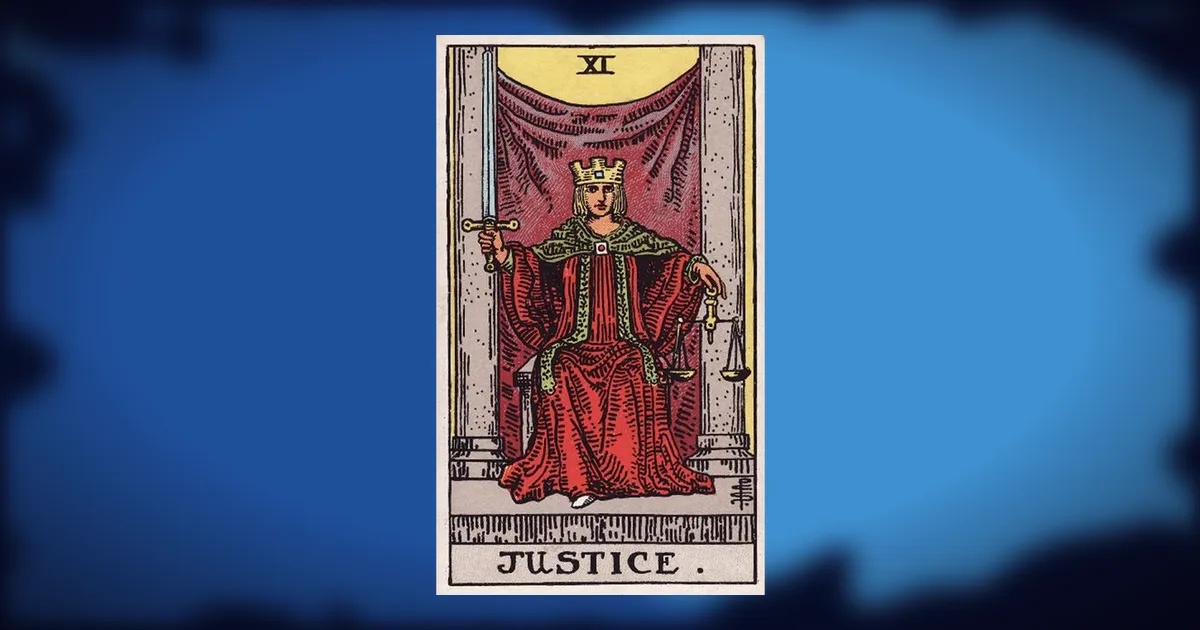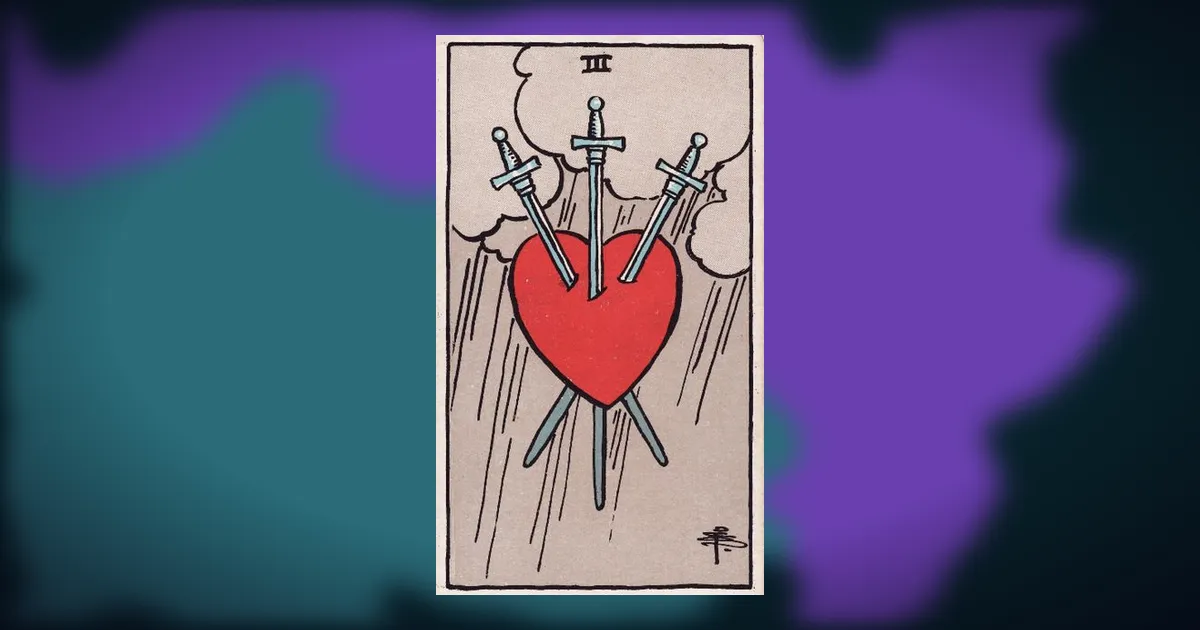
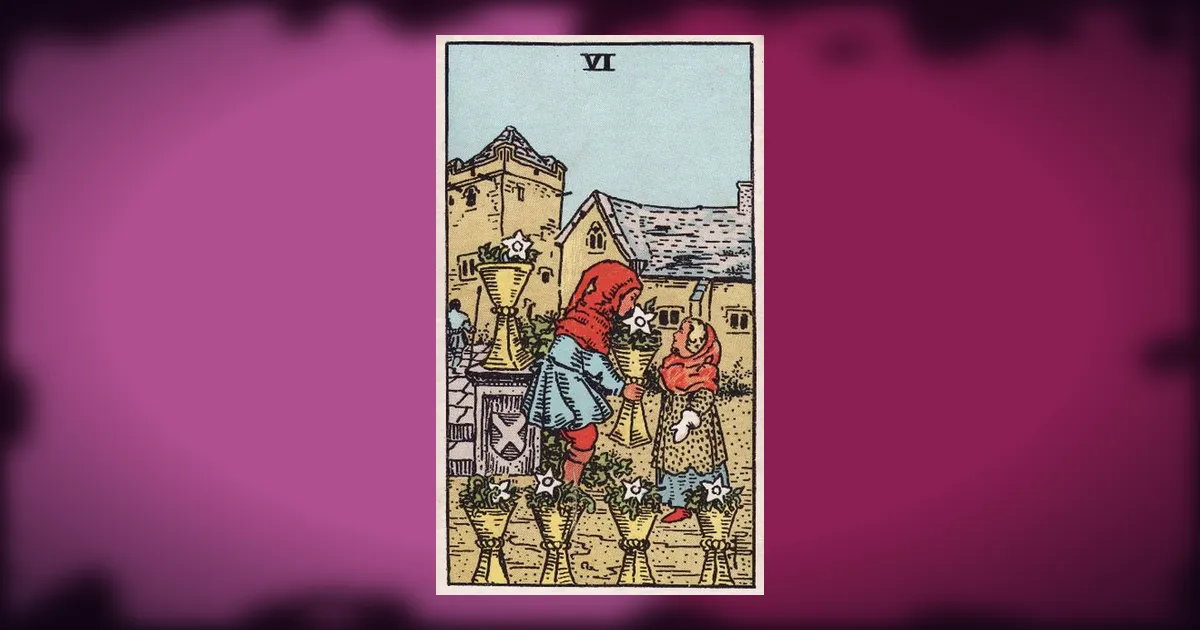
A reading about a man helps you see what he isn't always ready to say out loud: what he thinks of you, what he actually feels and where his intentions are leaning. It's one of the most common requests brought to tarot — and one of the most delicate, because it's easy to confuse the wish to understand yourself with an attempt to climb inside someone else's head. This article covers it honestly and practically: which spread to choose, which cards speak of infatuation and which of doubt and cooling, how to frame the question without manipulative phrasing, a step-by-step example of a real three-card reading, and the ethical side of the whole subject.
Why people do readings about a man at all
People usually come to this kind of spread in one of a few typical situations: he's behaving inconsistently — messaging every day, then disappearing for a week; the relationship is only starting and it's unclear where it's going; after an argument or a pause it's unclear whether the feeling has cooled; or you simply want to check your own intuition before making a move. Here the cards work not as a reference book on someone else's thoughts but as a tool that helps structure what you already sense underneath but haven't let yourself admit.
It's worth setting the frame straight away: tarot doesn't read a person's mind literally and doesn't replace a conversation. A spread shows a likely emotional background and the dynamic of the situation, drawing on the symbolism of the cards and on your own perception of what's happening. It's a tool for self-reflection, not a device for scanning someone else's consciousness.
Which spread to choose: “His feelings” and the alternatives
For “what does he feel for me?” the dedicated “His feelings” spread works best. The classic version uses three positions:
- Thoughts — what occupies his head when he thinks about you;
- Feelings — what he experiences emotionally, even if he doesn't show it;
- Actions — how he intends to behave from here, what he's inclining towards in practice.
The structure is useful because it separates three layers that get tangled in real life: someone can think of you warmly and at the same time fear closeness and act distant. Without the positions that looks like a contradiction; with the spread it looks like a coherent, explicable picture.
If the question is narrower and closed — “is he thinking about me right now?”, say — a short Yes/No spread works faster. And if you want to see not just the feelings but the outlook for the relationship as a whole — where it's heading, what the obstacles are, how it might end — take a fuller relationship spread or, for complex layered situations, the Celtic Cross.
Cards that speak of infatuation
There's a group of cards that in a reading about a man's feelings almost always read as a sign of genuine interest and warmth. Their appearance in the “feelings” or “thoughts” position is a good sign.
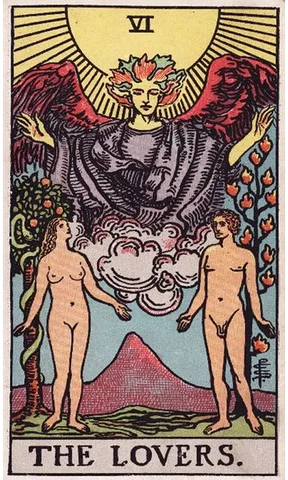
The Lovers — deep attachment
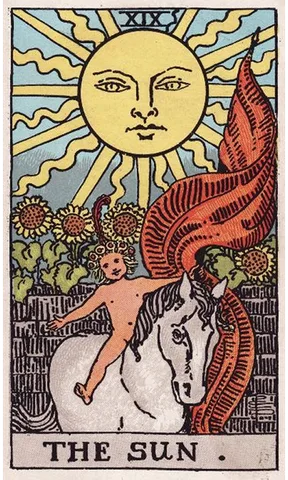
The Sun — openness, genuine gladness
- The Lovers — not a light attraction but a real emotional bond, the sense of having found “his person”;
- The Ace and Two of Cups — feeling taking root, mutual pull, the beginning of emotional closeness;
- The Knight of Cups — a romantic frame of mind, the wish to court and to show attention;
- The Sun — sincerity, ease in company, no hidden games;
- The Ten of Cups — a picture of a shared future, serious, long-range intentions.
If those cards also land in the “actions” position, it means the feelings aren't staying in his head — he's most likely ready to show them in practice: messaging first, suggesting meeting, saying things directly.
It's also worth taking into account which stage of a relationship you're reading at. Early on, Cups cards suggest attraction and curiosity, whereas in an established couple the same cards more often point to tenderness and attachment rather than a flash of new infatuation. So when interpreting, it always helps to pause and ask yourself: how long have you known each other, and what's been happening between you these past weeks? That grounds the card's symbolism in the real context instead of reading it in isolation.
Cards that speak of indifference or cooling
Another group of cards points to fading interest, emotional distance or weariness with the situation. It's important not to confuse them with “bad” cards in the sense of a curse — they simply show the current state honestly.
- The Five of Cups — disappointment, regret about the past, a focus on what didn't work out rather than on you;
- The Eight of Cups — emotional withdrawal, the wish to close the subject and move on;
- The Four of Cups — apathy, boredom, no interest even in new possibilities;
- The Five of Swords — conflict, the wish to “win” the situation rather than get closer;
- The Ten of Swords — a sense of exhaustion, that the subject is already closed for him.
Cards like these aren't a reason to panic but a reason to look honestly at the dynamic of recent weeks: you may already have sensed it intuitively, and the spread has simply confirmed the observation rather than told you anything unexpected.
Cards of doubt and hidden feeling
A separate — and probably the most frequent — category in readings about a man is the cards that speak neither of indifference nor of obvious infatuation but of the person's own inner uncertainty.
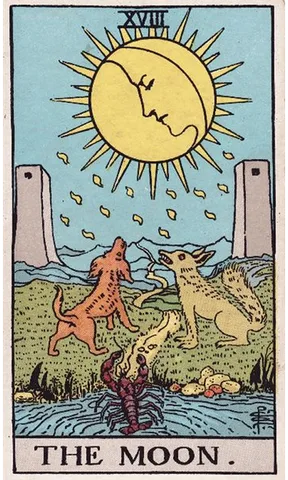
The Moon — he hasn't worked himself out yet
- The Moon — the most telling card in this group: it means he doesn't fully understand his own feelings, is afraid to admit them, or is deliberately leaving something unsaid;
- The Seven of Cups — too many options in his head, indecision, difficulty choosing in your favour;
- The Two of Swords — deliberately avoiding the decision, trying not to think about the subject at all;
- The Hermit — a need to be alone, not directly connected to how he feels about you but about his own inner state;
- The Hanged Man — a pause, a frozen situation, waiting on outside circumstances.
If cards from this group dominate a spread, the honest conclusion is this: he has no clarity himself right now. That's neither a yes nor a no — it's an invitation to stop filling in the blanks for him and clear the situation up in conversation.
Summary table: what the cards mean in a reading about a man's feelings
| Group | Cards | What it means |
|---|---|---|
| Infatuation | The Lovers, Ace and Two of Cups, Knight of Cups, the Sun, Ten of Cups | Genuine interest, warmth, readiness to get closer |
| Doubt | The Moon, Seven of Cups, Two of Swords, the Hermit, the Hanged Man | Inner uncertainty, things unsaid, a pause |
| Cooling | Five and Eight of Cups, Four of Cups, Five of Swords, Ten of Swords | Fading interest, weariness, emotional distance |
Full interpretations by suit and for the Major Arcana are in the tarot card meanings reference, and how cards combine is covered in the guide to card combinations — particularly useful when the cards in a spread seem at first glance to contradict each other.
How to frame the question
How you phrase the question directly affects how clear the answer will be. When reading about a specific person, a few principles matter.
Ask about his state, not about the outcome you want. “What does he feel for me now?” is a workable question. “Let him fall in love with me” isn't a question at all but an attempt to specify a desired result, and tarot isn't built for that. The difference is fundamental: a spread shows what is, it doesn't programme what should happen.
Hold the specific person in mind. Before drawing, focus on him — his face, his voice, the last conversation. That isn't a magic ritual but a way of focusing your own attention on the subject you're asking about.
Be specific rather than general. Instead of “what will happen between us?”, better to ask “what does he feel for me at the moment?” or “what are his intentions in the near term?”. General questions give general, not very useful answers.
Don't read the same question several times in a row. The answer won't get more accurate — you'll only increase the temptation to bend the interpretation towards what you want to hear, and the anxiety around the whole process will grow.
The ethical side: what's fine and what isn't
Let's be direct here. Reading a specific person's feelings without their knowledge is an entirely normal and widespread practice: you aren't intruding on their consciousness or influencing their decisions, you're trying to read a situation through the signals available to you — behaviour, intuition, the symbolism of the cards. It's no different in principle from asking a friend or a therapist for advice while observing the same person from outside.
What genuinely crosses the line is requests along the lines of “make him love me”, “bind him to me”, or any phrasing aimed at changing another person's will rather than understanding a situation. Tarot is a tool for self-reflection and for reading a likely scenario, not a lever for influencing someone else. If a reading shows cooling or doubt, that's a signal for your own decision — to speak openly, to let go, or to wait — not a cue to find a way to force someone's feelings.
A step-by-step example of a real reading
Let's work through a “thoughts — feelings — actions” spread to show the logic of interpretation in practice.
The question: “What does he feel for me, and how does he intend to act from here?”
The cards drawn: the Two of Cups (thoughts) — the Knight of Cups (feelings) — the Eight of Pentacles (actions).
- Two of Cups in “thoughts” — mentally he sees you as a partner, a potential couple, not just a friend. The thought of mutuality is already there;
- Knight of Cups in “feelings” — emotionally he's romantically taken, feeling inspired and warm, perhaps idealising the situation a little;
- Eight of Pentacles in “actions” — in practice he isn't rushing into grand gestures but acting gradually, investing in the relationship through concrete, down-to-earth steps: time, attention, care.
The overall reading: the interest is genuine and the feelings are real rather than a passing impulse, but they'll show through steady, consistent action rather than dramatic romantic gestures. If you're waiting for a striking declaration and getting practical care instead, that isn't a sign of indifference — it's simply a different style of expressing feeling.
By way of contrast, here's a different outcome. The cards drawn: the Hermit (thoughts) — the Five of Cups (feelings) — the Two of Swords (actions). Here thoughts of you are mixed with a need for solitude, the feelings are coloured by regret or dissatisfaction, and at the level of action there's avoidance and an unwillingness to decide. This spread says: now isn't the time to wait for him to take the initiative, and an honest conversation would be more useful than another attempt to guess from the cards.
Typical mistakes in readings about a man
- Reading instead of talking. The cards give a direction for thought, but they don't replace a direct conversation when the relationship needs one.
- Ignoring inconvenient cards. The temptation to redo a spread until the desired card appears is a reliable way to deceive yourself.
- Asking manipulative questions. “How do I make him fall in love?” isn't a suitable format for a feelings reading; better to ask about the current state than about ways to influence someone else's will.
- Reading too often. Daily spreads about the same person don't produce new information, they just increase anxiety and dependence on the cards.
- Ignoring the context of the relationship. The same card reads differently in a new relationship and in a couple with years of history — the symbolism has to be matched to the real situation.
A reading about him, online
You can take a quick reading of the situation right now — do the “His feelings” spread online, free. And if you want more than the cards themselves — a full explanation in words that accounts for the details of your particular situation — put the question to Mira in the bot. She'll draw the cards honestly for that specific person and unpack what lies behind his words and actions.
→ Open the bot and ask about his feelings
Frequently asked questions
Can you read about a married man or an ex-partner?
Yes, the technique is no different from any other situation. What matters is being ready for an honest answer and not bending the interpretation towards what you want to hear, especially in emotionally difficult cases.
Is the man's consent needed for such a reading?
No, consent isn't required. You're reading your own situation and your own perception of what's happening, not intruding on someone else's mind or will. This is standard, ethical tarot practice.
How accurate are these readings?
Tarot shows a person's current emotional state and likely frame of mind, not a fixed, unchangeable fate. Feelings and circumstances shift, so a spread reflects the picture here and now rather than a guarantee about the future.
What should you do if the Moon comes up?
The Moon means murkiness and things unsaid: either he hasn't worked out his own feelings yet, or he's deliberately not voicing something. It's a signal to stop filling in the blanks for him and clarify things directly, in conversation.
Can tarot make a man fall in love?
No, and this is an important ethical point. Tarot is a tool for understanding a situation and for self-reflection, not a way to influence someone else's will or feelings. Readings aimed at manipulation are at odds with what the instrument is for.
Why do different cards come up for the same question on different days?
Because the situation itself changes — his mood, the circumstances, the dynamic between you. Tarot captures a state at a particular moment, not a fate set once and for all.
What if the cards contradict each other?
That's normal and common — people are internally contradictory too. In that case look more closely at the combinations in the combinations guide, or do a fuller spread such as a love spread to see the wider picture.