Tarot card meanings look like an endless maze to a beginner: 78 cards, each with an upright and a reversed reading, and the sense of it shifting with the neighbouring cards and the question you asked. Underneath that apparent chaos there's a tidy, logical system. Once you see how it's built — what the deck is made of, what each group of cards covers, how the numbers and the suits work — you stop cramming and start reading the cards the way you read text in a language you know. This guide walks through the whole structure of the deck, the Major and Minor Arcana, the role of the court cards, the logic of the numbers, upright and reversed positions, combinations and a worked example. The exact reading of any individual card is always in our tarot card reference.
What a tarot deck is made of
A classic deck — the Rider–Waite system is usually taken as the standard — holds exactly 78 cards, split into two large groups. Understanding that split is the foundation; there's no point going further without it.
- The Major Arcana — 22 cards numbered from 0 (the Fool) to 21 (the World). These are the deck's heavy artillery: fate-shaping events, karmic lessons, major stages of a life and deep psychological processes.
- The Minor Arcana — 56 cards across four suits. They describe the fabric of everyday life: particular emotions, tasks, conversations, money and ordinary situations.
There's a simple rule for reading a spread from a height: the more Major Arcana in a spread, the more significant and fate-laden the situation, and the less it's in your hands right now. If the Minor Arcana dominate, the question is an everyday one, fixable, and mostly down to what you do.
The Major Arcana: the Fool's Journey
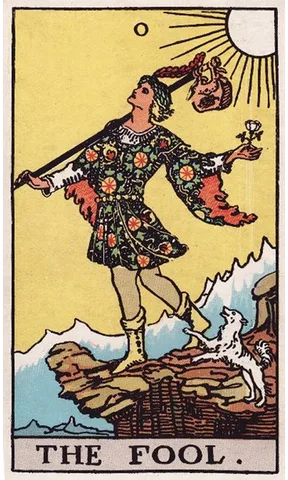
0 · The Fool
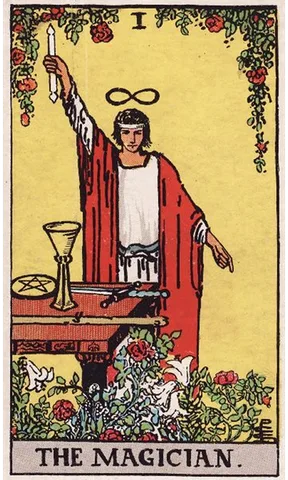
I · The Magician
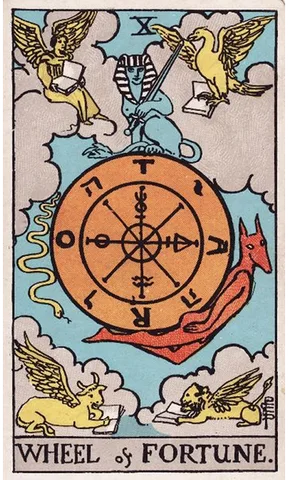
X · The Wheel
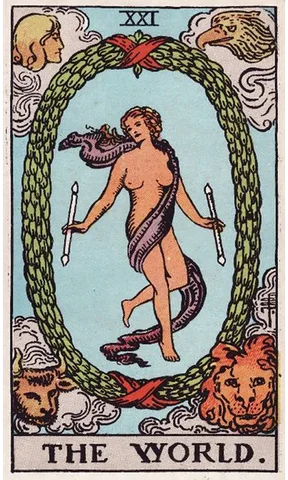
XXI · The World
The 22 Major Arcana aren't a random set — they're a sequence, and the story they tell is called the Fool's Journey. It's a metaphor for a soul growing up: a naive hero (the Fool, 0) sets out, meets teachers and trials, and arrives at wholeness (the World, 21). Read in order, the arcana make a coherent drama of growth.
| № | Arcana | What it speaks of |
|---|---|---|
| 0 | The Fool | A beginning, pure potential, a leap into the unknown, spontaneity |
| I | The Magician | Will, resources, the ability to act — “you have everything you need” |
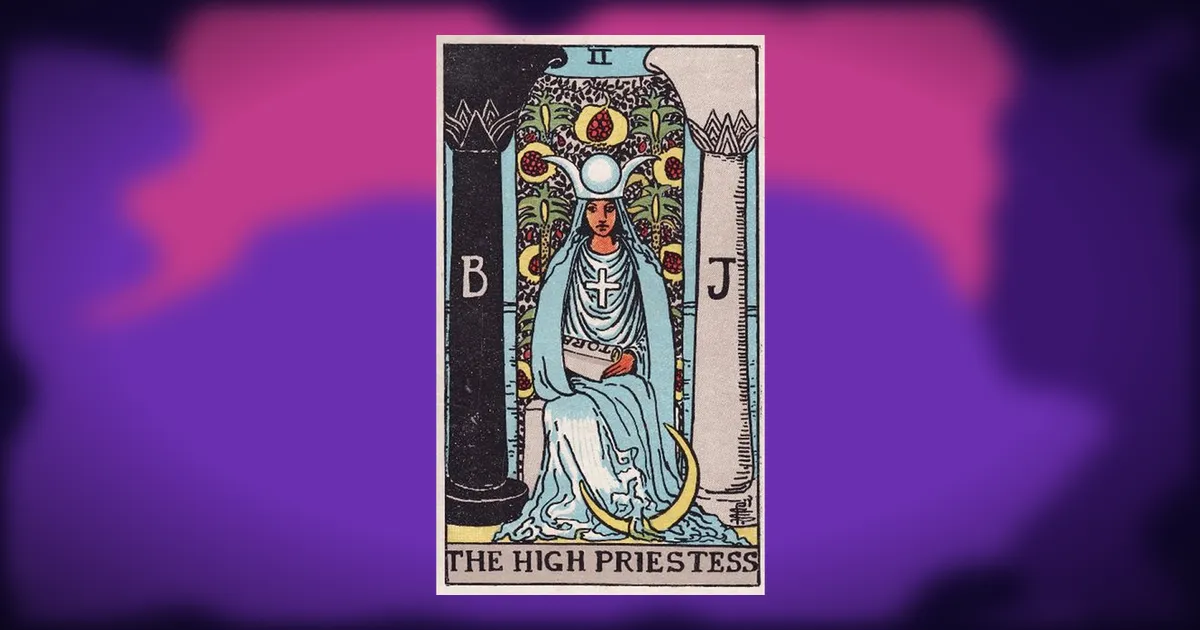
| II | The High Priestess | Intuition, mystery, inner knowledge, patient waiting |
| III | The Empress | Abundance, care, creativity, motherhood, fertility |
| IV | The Emperor | Structure, order, authority, stability, discipline |
| V | The Hierophant | Tradition, mentorship, institutions, spiritual rules |
| VI | The Lovers | Love, choice, union, values and what actually matters to you |
| VII | The Chariot | The will to win, forward movement, control, drive |
| VIII | Strength | Inner steadiness, gentle mastery, courage of the heart |
| IX | The Hermit | Solitude, the search for truth inside, a pause, earned wisdom |
| X | The Wheel of Fortune | A turn of fate, cycles, change, luck and how it moves |
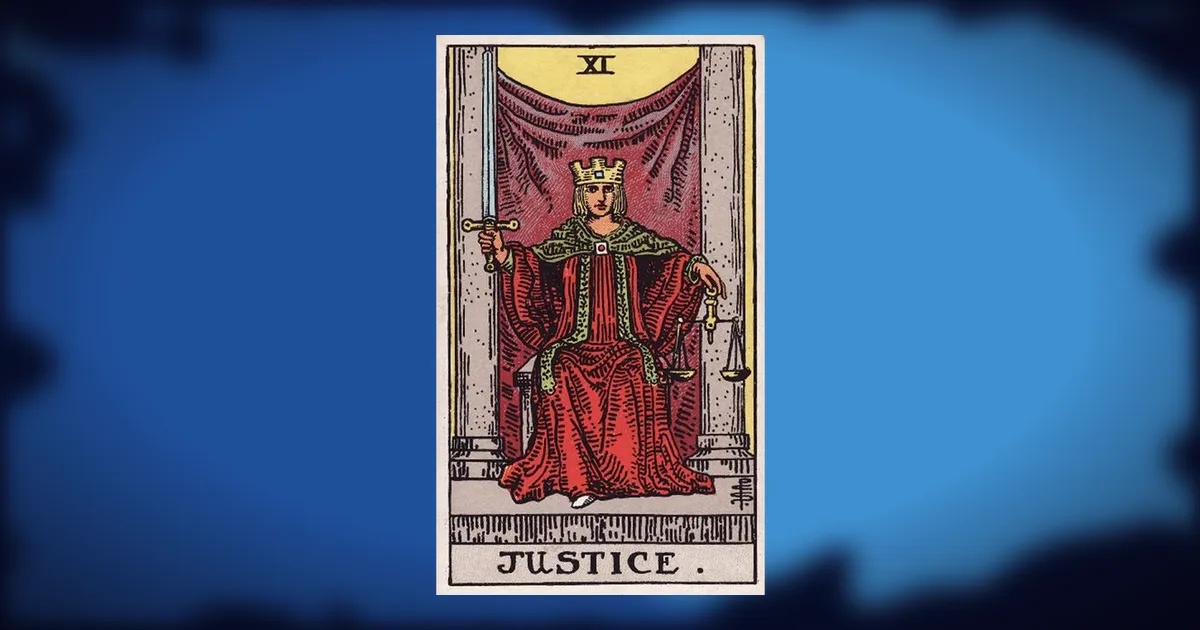
| XI | Justice | Cause and effect, honesty, balance, getting what you're due |
| XII | The Hanged Man | A pause, a change of angle, willing sacrifice, letting go |
| XIII | Death | Endings and transformation (almost never literal death) |
| XIV | Temperance | Balance, harmony, healing, the middle way |
| XV | The Devil | Dependencies, temptation, material chains, fear |
| XVI | The Tower | Illusions falling suddenly, crisis, a liberating blow |
| XVII | The Star | Hope, inspiration, healing, faith in what's coming |
| XVIII | The Moon | Illusion, anxiety, murk, the subconscious at work |
| XIX | The Sun | Joy, success, clarity, vitality |
| XX | Judgement | Awakening, reappraisal, a calling, a second chance |
| XXI | The World | The close of a cycle, wholeness, achievement, harmony |
Don't try to memorise the table. It's enough to catch the plot: from the Fool and the Magician, through the crises of the Tower and the Devil and the light of the Star and the Sun, to the World. Then you'll place any arcana inside the journey rather than reading it as an isolated dictionary entry.
The Minor Arcana: the four suits
The 56 minor cards split into four suits, and each suit is tied to an element and a particular area of life. This is the most workable knowledge there is: get the suits and half the deck reads itself.
| Suit | Element | Area of life | Keywords |
|---|---|---|---|
| Cups | Water | Feeling, love, relationships | emotion, intuition, closeness, attachment |
| Wands | Fire | Energy, action, creativity | passion, career, ambition, inspiration, will |
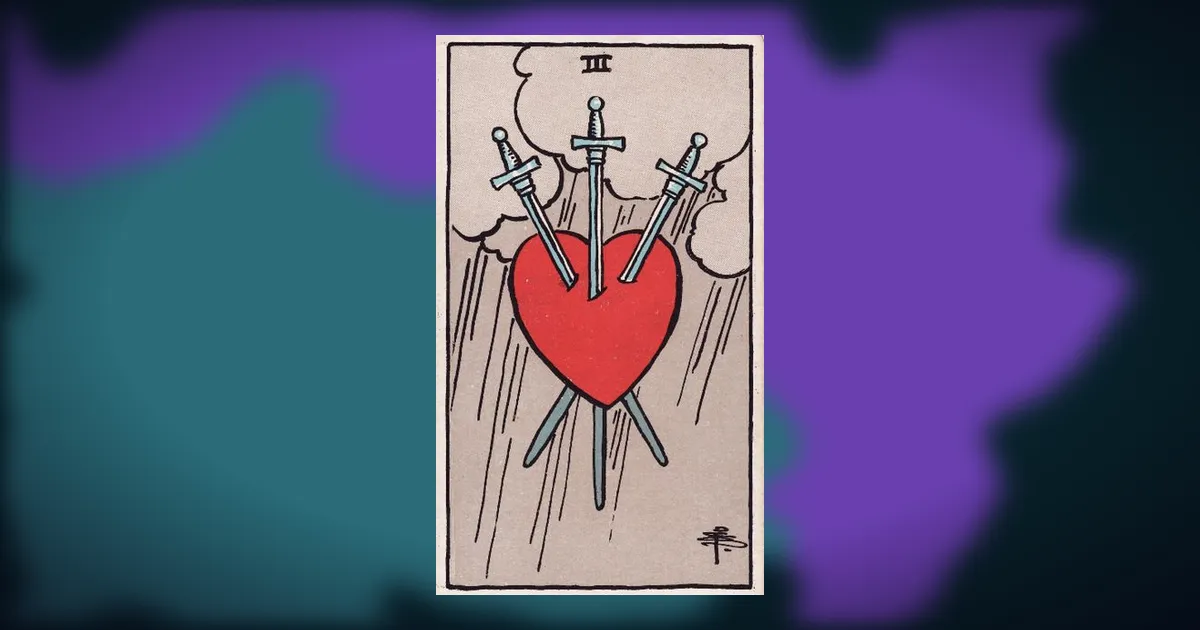
| Swords | Air | Thought, words, conflict | decisions, logic, argument, anxiety, truth |
| Pentacles | Earth | Money, work, the body | finance, stability, health, matter, home |
The suits alone tell you what the reading is about. A run of Cups — the question is about the heart. Swords turn up — the head is involved, along with conflict and worry. Pentacles mean money and stability, Wands mean action, drive and career. If you want to go deeper on the love side, see the article on the love spread.
The logic of the numbers, Ace to Ten
Each suit holds 14 cards: ten numbered (Ace to Ten) and four court cards. The numbers are stages in the development of one theme, and they work the same way across all four suits. Understand the number and you understand the stage of the story, whatever the suit:
- Ace — the seed, the pure potential of the suit, a new beginning;
- Two — choice, partnership, the first exchange;
- Three — the first result, growth, expansion;
- Four — stability, a pause, consolidation;
- Five — conflict, crisis, the theme tested to breaking point;
- Six — harmony, help, coming out of the crisis;
- Seven — a challenge, illusions or persistence, the inner work;
- Eight — movement, craft, speed;
- Nine — almost the peak, the height of the feeling, joyful or anxious;
- Ten — the limit, the suit's cycle completed, the turn onto a new one.
Here's the rule in action: a Five is always a crisis. The Five of Cups is emotional loss and grief, the Five of Pentacles material hardship, the Five of Swords conflict and a hollow victory, the Five of Wands friction and a clash of interests. The suit changes the area; the number sets the turn in the plot.
The court cards: people and roles
The Page, the Knight, the Queen and the King are the deck's people. They stand either for a specific person in your situation, or a character trait, or a way of behaving you might want to adopt — or watch out for:
- The Page — the student, the newcomer, curiosity, first steps, news;
- The Knight — action, movement, drive (and sometimes impulsiveness);
- The Queen — mature command of the suit's energy from the inside, through feeling and care;
- The King — mature command of the same energy outward, through authority and responsibility.
Put the rank together with the suit and you get a portrait. The Queen of Cups is a perceptive, empathic woman — or your own capacity to love and feel with someone. The King of Pentacles is a reliable, established figure, financial stability and a head for business. Court cards are the hardest part for beginners, which is exactly why they're worth checking against the reference.
Upright and reversed
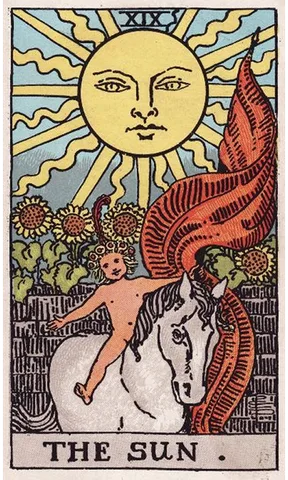
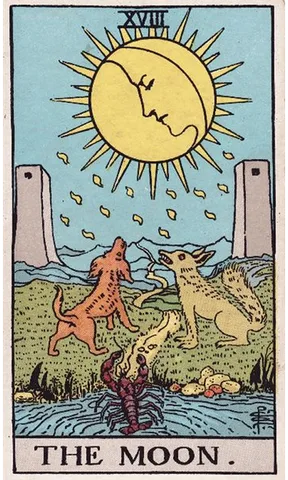
The same card reads differently depending on which way up it falls. Upright strengthens the card's core, daylight meaning. Reversed usually weakens, blocks, delays or inverts it — and sometimes points to the shadow, inward version of the same quality.
The Sun upright is open joy, success and clarity; reversed it's a temporary dip, joy postponed, light behind cloud. The Ten of Cups upright is family happiness; reversed it's a crack in the idyll, or the gap between the picture and the reality.
An important caveat for beginners: you don't have to read reversals from the start. Plenty of experienced readers never use them at all, reading a card's strength and shadow from the context of the spread instead. If reversals confuse you, read upright meanings only to begin with — that's entirely legitimate. There's a full treatment in “Reversed tarot cards”, and every card's meaning in both positions is in our encyclopedia.
How cards affect each other: combinations
The classic beginner's mistake is reading cards separately, like words out of a dictionary. In a spread the cards form a sentence, and a neighbour can turn the meaning around. The Tower next to the Star is “destruction that makes room, healing after the crisis”. The same Tower next to the Ten of Swords is a painful, total collapse.
A few practical principles:
- Neighbouring suits. Lots of Swords around means an anxious, head-driven spread; lots of Cups means an emotional one. A dominant suit highlights the real area of the question.
- Repeated numbers. Several Threes or Fives in a spread amplify the stage: Fives are a general crisis, Threes are growth across several areas at once.
- Light and shadow side by side. A heavy card is softened by a bright neighbour and vice versa — read them as a pair, not in isolation.
We've gathered the popular pairs and triplets in a separate section: tarot card combinations.
How to read a card, step by step
To stop a meaning from becoming a set of memorised words, read every card the same way:
- Your first reaction. What do you see in the image? What mood, what colours, what is the figure doing? The intuitive response is often more accurate than the dictionary.
- Suit and number (for the minors) or the point on the journey (for the majors). Establish the area and the stage.
- Orientation. Upright or reversed — strengthen, weaken or turn the meaning.
- Position in the spread. The same card in the “past” position and in the “advice” position reads differently.
- Neighbours. Tie the card to the ones around it, and you get a story rather than a list.
A worked example: three cards
The question: “What do I need to understand about my relationship right now?”
The cards: the Two of Cups (upright) — the Five of Swords (upright) — the Star (upright).
- The Two of Cups — Cups (feeling) plus a Two (union): there's a genuine mutual connection between you, a foundation for partnership.
- The Five of Swords — Swords (conflict) plus a Five (crisis): but there's an argument in which someone is set on winning at any cost, and the fight is hurting you both.
- The Star — a Major Arcanum of hope: despite the conflict, there's a real prospect of healing, if you can let go of needing to be right.
The story: a solid connection (the Two of Cups) is currently suffering from a battle over who's right (the Five of Swords), but the relationship has a chance of recovering (the Star) if the focus moves from winning to making peace. Note that no single card would have produced that conclusion — the meaning came out of the combination and the order.
How to learn the meanings quickly
The good news is that card meanings stick through practice, not cramming. What works best:
- A card of the day. Draw one card each morning and watch through the day for how its meaning shows up. In a month you'll have lived thirty cards — far more durable than any list.
- Learn the system, not the list. First the four suits and their elements, then the logic of the numbers, then the court cards, and only then the 22 majors as separate characters.
- Keep a journal. Write your spreads down and come back to them a week later: you'll see where a card actually landed.
- Lean on the picture. In the Waite system the illustrations carry the meaning — trust your visual memory.
For a step-by-step introduction from scratch, read our guide “How to read tarot”, then start with a simple card of the day.
Don't want to memorise it? Ask Mira
Working through 78 meanings yourself is genuinely interesting, but it isn't fast. If you need an answer now, you don't have to hold the deck in your head. Put your question to Mira in our bot: she shuffles honestly, draws a spread for your situation and explains what each card means in words — accounting for the suit, the orientation and the combinations. It's like having an experienced reader on hand who doesn't just name the card but tells you what it means for you.
→ Open the bot and get a reading
Frequently asked
How many cards are there in tarot?
78: 22 Major Arcana (from the Fool to the World) and 56 Minor — 14 cards in each of four suits (Cups, Wands, Swords, Pentacles).
Do I have to memorise every meaning?
No. It's enough to understand the structure: the elements and areas of the suits, the logic of the numbers and the roles of the court cards. Look the exact readings up in the reference — they stick on their own with practice.
Which matter more, the Major or the Minor Arcana?
Both. The majors speak of large, fate-shaping themes and lessons; the minors of the detail of everyday life. A spread's power comes from the combination: the majors set the weather, the minors the specifics.
Where should a beginner start?
With the four suits and their elements, then the logic of the numbers from Ace to Ten. Draw a card of the day alongside that. Learn the Major Arcana separately, as 22 characters on the Fool's Journey.
Do I have to read reversed cards?
No. Many readers work with upright positions only, reading a card's shadow from context. Starting that way is fine and even helpful — add reversals once the upright meanings are comfortable.
Why does the same card mean different things in different spreads?
Because the meaning depends on the position in the spread, the question asked, the orientation and the neighbouring cards. Cards are read as connected text, not as separate words.
What does it mean if a spread is full of Major Arcana?
It's a sign the situation genuinely matters, is fate-shaping, and is largely driven by forces outside your immediate control. A spread full of minors means an everyday question you can fix by what you do.