A Yes/No tarot reading is the quickest way to get a concrete answer when a decision is needed right now and your head is spinning with doubt. You don't need to lay out ten cards and unpick complicated positions: one or two cards give you a clear direction in under a minute. This guide covers all of it — how the spread works, how to phrase the question properly, exactly which cards mean “yes”, “no” and “it depends”, how to handle reversals, a worked example and the usual mistakes — and how to do a Yes or No reading online for free.
What a Yes/No tarot reading is
It's a short spread that answers a closed question — one that can, in principle, be answered yes or no. For example: “Should I take this job?”, “Will he come back?”, “Will this work out this month?”
It's worth understanding what this kind of reading actually does. The cards don't predict fate literally and don't hand down a verdict. They show the energy of the situation and the most likely outcome if you carry on acting the way you are now. Change how you behave and the answer changes. So a “no” here usually means not “this will never happen” but “on your current course, unlikely”.
The format's advantage is speed and clarity. When doubt has you frozen, a definite yes, no or “not yet” gives you ground to stand on and lets you take the next step. That's exactly why the Yes/No spread is one of the most requested things in tarot.
Three ways to run a Yes/No spread
1. One card — a quick answer
The simplest version. You ask your question, shuffle the deck and draw a single card. Its meaning and orientation — upright or reversed — is the answer. Good for small, everyday questions where you just want a nudge.
2. Three cards — a weighed result
For anything that matters, draw three. The majority rules: if at least two cards are positive, the answer is yes; if two are negative, it's no. The third card shows the nuance, the condition or what to watch out for. That way you get context along with the answer.
3. What reversals do
A reversed card often — though not always — weakens or flips the answer. A reversed Sun is no longer a confident yes but “yes, with a delay”. There's more on orientation in “Reversed tarot cards”. If you're new to this, reading upright meanings only is a perfectly acceptable place to start.
Which cards mean yes, no and “it depends”
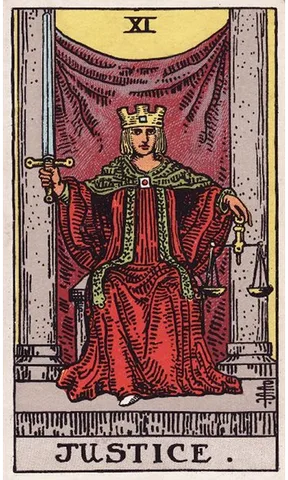
The logic is simple: bright, sunlit, generative cards lean toward yes; cards of crisis, loss and illusion lean toward no; cards of balance and pause say “it depends”. Here's a reference table (the full card meanings are in the encyclopedia):
| Answer | Cards | Why |
|---|---|---|
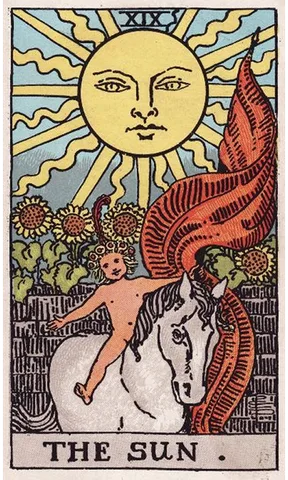
| Yes | The Sun, the World, the Star, the Wheel of Fortune, the Magician, the Empress, the Lovers, Strength, Temperance, all four Aces | Success, growth, harmony, resources on your side |
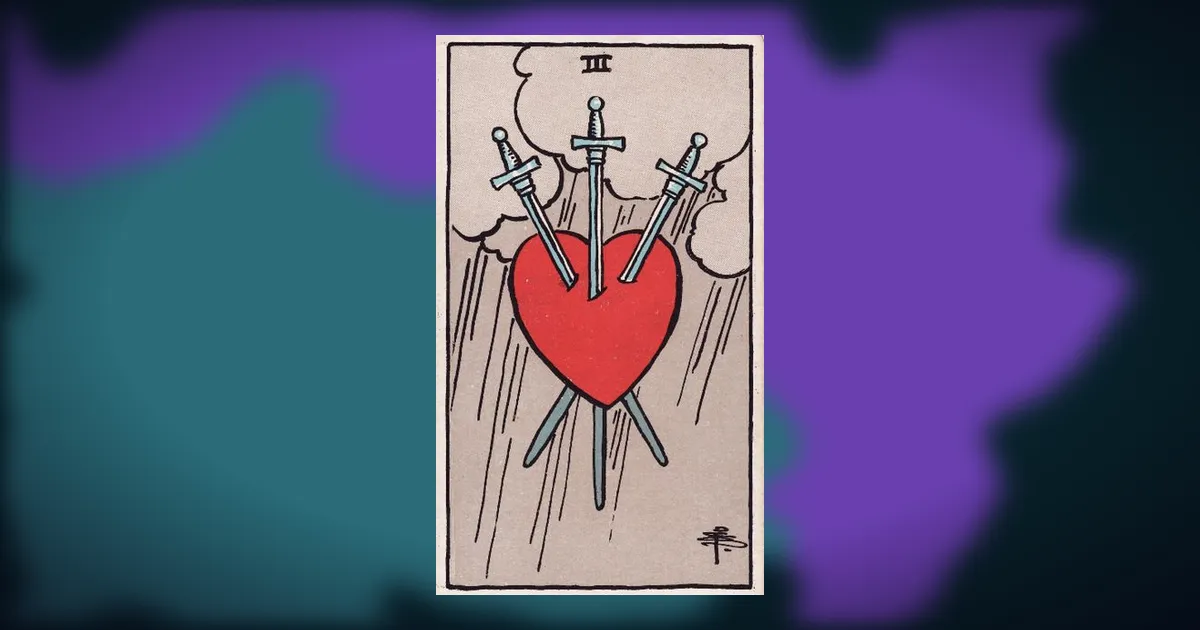
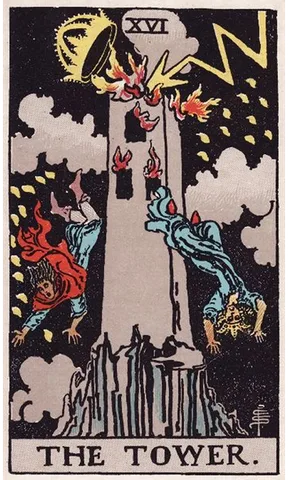
| No | The Tower, the Moon, the Devil, the Ten of Swords, the Three of Swords, the Five of Cups, the Five of Pentacles | Crisis, deception, loss, dependency, disappointment |
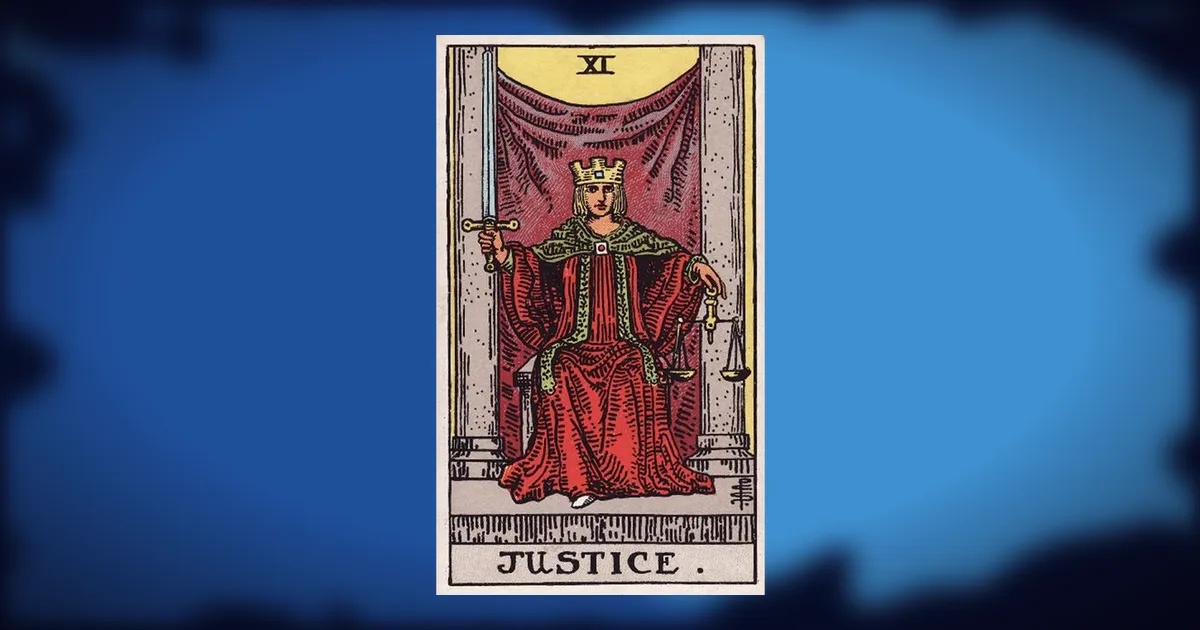
| It depends | Justice, the Hermit, the Hanged Man, the Two of Swords, the Seven of Cups | A pause, the choice is yours, you need more information |
How to phrase a Yes/No question
The precision of the answer depends directly on the wording. A vague question gets a vague answer. Four rules:
- Closed and specific. Not “what's going to happen with him?” but “should I message him first this week?”
- One question per reading. Don't mix subjects — ask about work and about love separately.
- Something you can influence. Tarot answers “will I win the lottery?” badly, because there's no choice of yours in it. Ask about what you can act on.
- Settle first. Put the question into words in your head, focus on it, and only then draw.
Good questions look like: “Should I accept this offer?”, “Is he romantically interested in me right now?”, “Would moving this year do me good?”
A worked example
Here's a real three-card reading.
Question: “Should I take the new job offer?”
The cards: the Magician (upright) — the Eight of Pentacles (upright) — the Five of Cups (upright).
- The Magician — yes: you have every skill and resource you need to handle it;
- The Eight of Pentacles — yes: this is about growth, craft and an investment in yourself that pays off;
- The Five of Cups — a caution: you may have to let something familiar go and feel the loss of it.
The verdict: two cards out of three are a confident yes. Take the offer, but be ready for the change and for a little nostalgia for the old place. Notice how the third card doesn't cancel the answer — it adds an important nuance to it.
Common mistakes
- Re-asking. Putting the same question ten times until the “right” answer turns up. The first reading is the honest one.
- A woolly question. “Will I be happy?” gets you a foggy answer.
- Ignoring orientation. An upright and a reversed card give different answers.
- Reading while distressed. When you're upset it's easy to read what you want to see rather than what's there.
When a Yes/No reading gives you nothing
Sometimes the cards come up neutral or contradictory — and that's an answer too: the situation hasn't settled yet, and the decision is yours. In that case move to a fuller spread — the Celtic Cross on ten cards, say, which shows the causes, the obstacles and the outlook. If you're still learning the cards, start with the guide “How to read tarot”.
Yes or No online — free, no sign-up
You don't need your own deck. You can do a Yes or No reading online right now. And to get more than a card — a living, personal interpretation of your situation — ask Mira in our bot: she shuffles honestly, draws the cards and explains the answer in words, in the context of your question.
→ Open the bot and ask your question
Frequently asked
How many cards do I need for a Yes/No reading?
One is enough for a quick answer. Three give a more weighed result: the majority decides, and the third card adds the nuance.
Can I use Yes/No for questions about love?
Yes — it's one of the most common uses. Be specific: “Is he romantically interested in me right now?” rather than a general “does he love me”.
What if the card comes up reversed?
A reversal usually weakens a yes into “probably not”, or points to obstacles and delay. Take it into account — though when you're starting out, reading upright meanings only is fine.
What does it mean if the same card keeps coming up?
If the same card appears for the same question across attempts, that's an emphasised answer: the subject genuinely matters and it has already settled.
How often can I ask the same question?
No more than once. If nothing has changed, asking again only muddies it. Come back to the question later, or when the circumstances actually shift.
Are Yes/No readings accurate?
Tarot shows the likely course and the energy of a situation, not a fixed fate. Accuracy is higher when the question is specific and you're honest with yourself and ready to accept any answer.