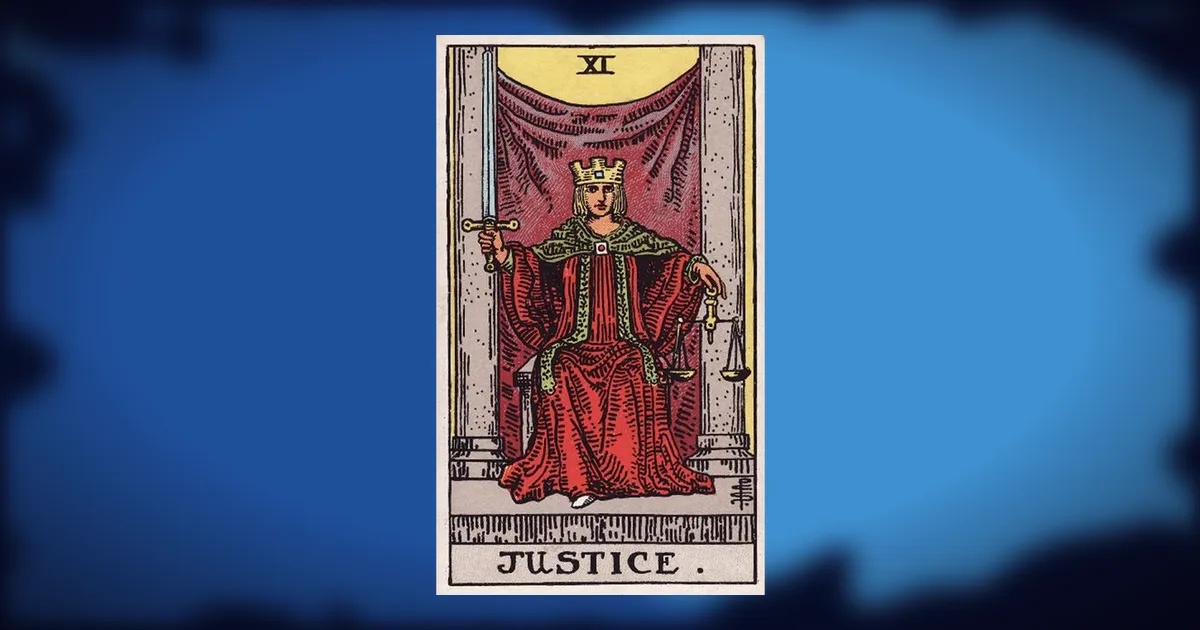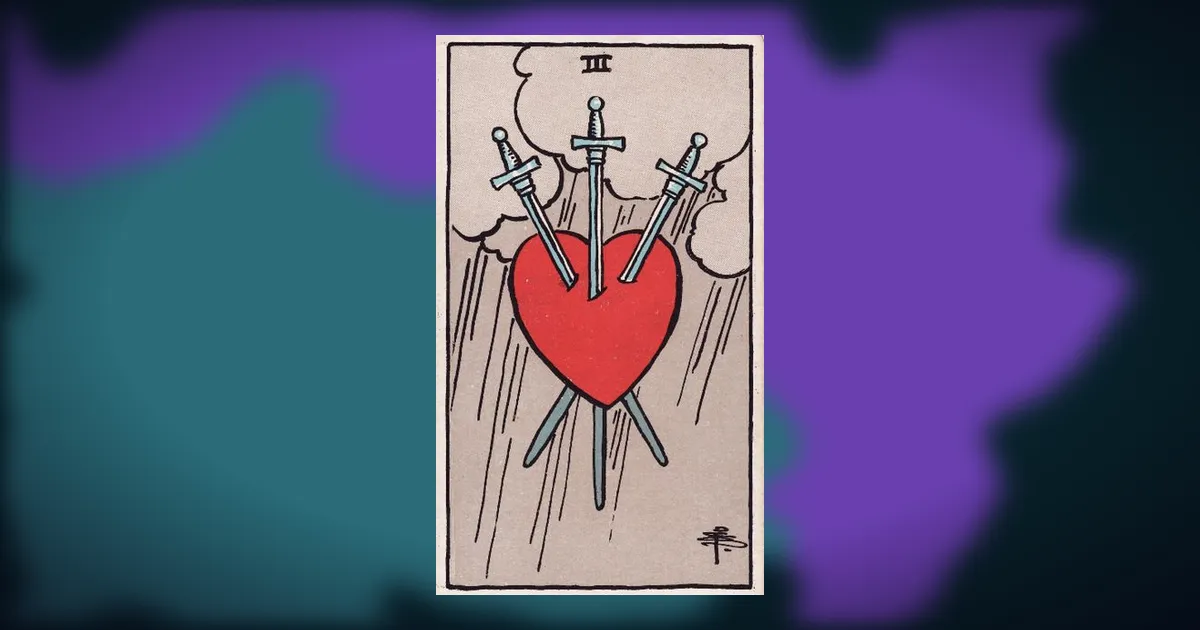
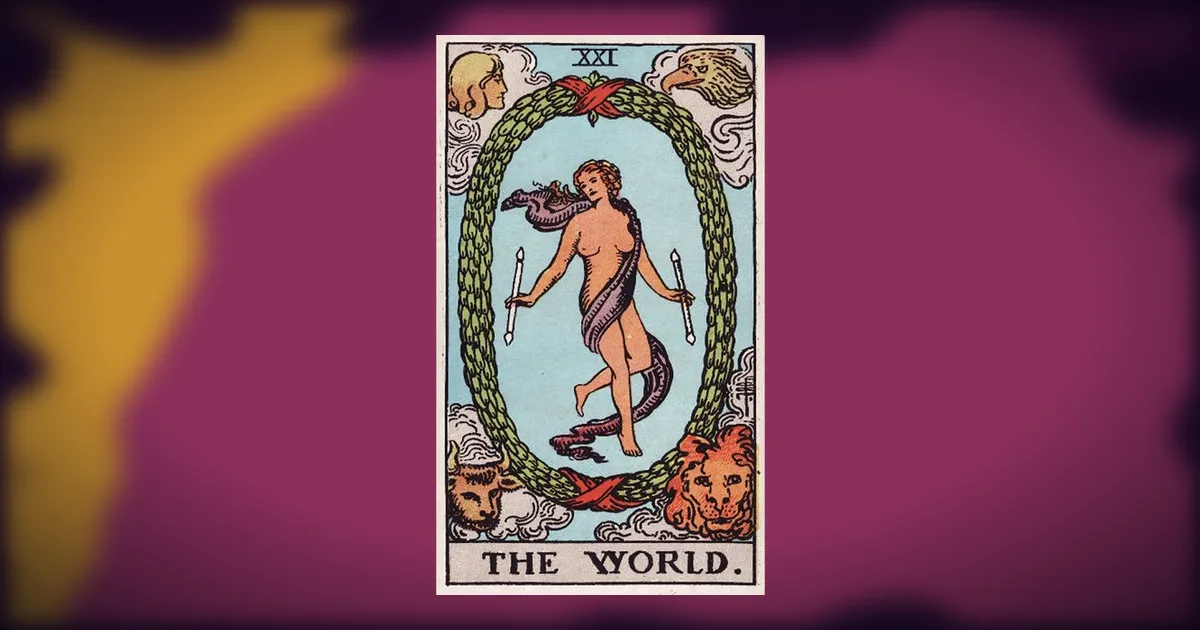
The Celtic Cross is the best-known and most detailed tarot spread — ten cards that open a situation up from every side at once: what's happening now, what led to it, what's in the way, where it's heading and how it's most likely to end. Where a short spread like Yes/No gives you a quick bearing, the Celtic Cross is a full X-ray: it shows cause and effect, the hidden influence of the people around you, and the internal tug between hopes and fears. Below: the meaning of all ten positions, how to lay the cards out, a worked example with the interpretation, and the mistakes beginners usually make.
What it is, and how it differs from simple spreads
The Celtic Cross is a classic layout known since the late nineteenth century and still the gold standard for deep analysis. Unlike a three-card past–present–future or a Yes/No reading, where the answer fits into a sentence or two, here the cards tell a full story: where the situation came from, what feeds it, what holds it back, how you yourself see it, how others see and affect it, and how it is most likely to end.
Which is exactly why the Celtic Cross isn't an everyday spread. It takes time, a calm setting and a willingness to hold the cards against each other thoughtfully. In return you get a picture with volume to it — almost a therapy session with yourself, with the cards as the structure for thinking.
When to use it
This spread suits questions with no simple yes or no — where what matters is understanding the mechanics:
- A tangled relationship — when it isn't clear what holds a couple together and what drags them down;
- A career choice — change jobs or stay, which direction to grow in;
- A long-running conflict — with a partner, a family, colleagues, that keeps going round in circles;
- A crossroads — a move, a major decision, a change of course;
- The general “what is going on with me” — when you can't name a specific problem but the sense that something is off won't let go.
For fast closed questions like “should I message him today”, the Celtic Cross is overkill — it drowns in detail where you needed one clear signal. Use a Yes/No spread or an express reading of one to three cards instead. And if you're just starting with the cards, it's worth learning the basic meanings first — where to begin is covered in “How to read tarot”.
The Celtic Cross isn't fortune-telling about whether something will happen. It's a map of the terrain: where you are, what brought you there and where the various paths lead next. The decision still belongs to you.
How to lay the cards out
Before you start, phrase the question as specifically as you can — a general question gets a general answer about everything and nothing. Then shuffle while holding it in mind and deal ten cards in order. The classic layout has two blocks.
The cross of six (on the left)
The first card goes in the centre — the heart of the situation. The second lies across it, crosswise, which is where the spread gets its name: the obstacle. The third goes below the centre — the foundation; the fourth to the left — the recent past; the fifth above — the possible future; the sixth to the right of the central cross — the near future. The result is a cross shape with one extra card on top.
The column of four (on the right)
To the right of the cross, four more cards are laid bottom to top in a single vertical line: the seventh is you, the eighth your environment, the ninth your hopes and fears, and the tenth, at the top, the outcome. That column is traditionally called the staff — it traces the movement from your own position to the final result.
All ten positions in detail
Here's a table of all the positions, useful as a reference while you read.
| № | Position | What it means |
|---|---|---|
| 1 | The present situation | The core of the question, what's happening right now |
| 2 | The obstacle / challenge | What's in the way, what has to be handled or overcome |
| 3 | The foundation / cause | The roots — the deep cause, often from the past or the subconscious |
| 4 | The recent past | Recent events that are already closing and moving off |
| 5 | The possible future / the goal | Where things are heading on the current course, what you're reaching for |
| 6 | The near future | What happens next, the immediate step in events |
| 7 | You / your position | Your inner state, your attitude to the situation, your point of view |
| 8 | The environment / other people | How others see and affect the situation, and the outside circumstances |
| 9 | Hopes and fears | Your inner expectations and anxieties — what you haven't fully admitted |
| 10 | The outcome | The most likely end to the situation given the current dynamic |
1. The present situation
The central card, the heart of the whole question. It shows what's happening literally now, unvarnished — an emotional or factual snapshot of the moment. If this card diverges sharply from how you phrased your question, look closer: the real issue may not be the one you named.
2. The obstacle or challenge
The card laid crosswise over the first — symbolically it literally covers the situation. It isn't always something bad: sometimes the obstacle is simply a challenge you have to accept in order to move. And don't confuse an obstacle with an enemy — often it's the person's own inner resistance.
3. The foundation, the cause
This position reaches deeper — it shows what sits underneath: an old belief, a pattern of behaviour, a long-ago event. The foundation is rarely obvious at first, and it's often this card that explains why the same situation keeps recurring in someone's life.
4. The recent past
Shows the events and influences that have already happened and are gradually leaving the stage. Not ancient history — what happened very recently and led you directly to the present moment.
5. The possible future, or the conscious goal
One of the most ambiguous positions in the spread: some readers take it as “the likely development of events”, others as “what you're consciously reaching for” (as opposed to the subconscious hopes and fears in position nine). In practice it's useful to hold both meanings: the card shows the vector the situation is being pulled along on its current course.
6. The near future
Unlike the fifth position, this isn't a general tendency but the specific next step — what happens in the coming days or weeks. This card tells you what to expect literally next week.
7. You and your position
Shows your inner state in relation to the question: how you actually feel, what role you're taking — active or passive, confident or anxious. This card sometimes lands uncomfortably: someone is sure they're feeling decisive, and the card shows hesitation or avoidance.
8. The environment and other people
This position covers the outer context: how other people see and affect the situation — a partner, family, colleagues, a boss — plus the circumstances you don't fully control.
9. Hopes and fears
One of the subtlest and most honest positions in the spread. It shows what's happening below conscious awareness — and hope and fear are often braided into a single card, because we're afraid of precisely what we want most. Don't rush the interpretation: ask yourself which of the two lands harder.
10. The outcome
The final card at the top of the column — the likely result of the whole chain of events if nothing changes fundamentally. It isn't a sentence handed down by fate but a forecast for the current trajectory: once you see it, you can adjust what you do and change the ending.
Reading it as a story, not as ten cards
The core skill with the Celtic Cross is seeing a connected story rather than ten scattered cards. Try reading it in blocks:
- Positions 1–2 — the setup: what's happening and what stands against it;
- Positions 3–4 — the backstory: where it all came from;
- Positions 5–6 — the movement: where it's going and what happens next;
- Positions 7–9 — the inner and outer context: you, the people around you, the hidden feelings;
- Position 10 — how the story resolves.
Watch how the cards echo each other. Several cards from one suit — a run of Swords, say — puts the emphasis on thought, conflict and decisions rather than on feeling or money. If the Major Arcana dominate, the situation is fate-shaping and depends little on everyday detail: the big themes have engaged. Mostly Minor Arcana means the question is about the everyday and about specific actions. It's also worth looking at pairs of adjacent cards — how meanings reinforce and soften each other is covered in “Tarot card meanings” and in the card combinations section.
A worked example
Here's a practical case to show the logic in action.
The question: “What's going on in my relationship and where is it heading?”
The cards (abridged to the key positions):
- 1. The situation — the Ten of Cups (upright). On the surface everything looks harmonious: a sense of home, emotional stability, “we're a family”.
- 2. The obstacle — the Five of Swords (upright). But underneath that harmony sit unspoken grievances and a habit of winning arguments instead of settling them. One of the two feels like the loser in every small skirmish.
- 3. The foundation — the Two of Cups (reversed). The cause: at the start of the relationship no real dialogue between equals was ever built — the partners accommodated each other rather than agreeing openly.
- 7. You — the Hermit (upright). Inwardly you've withdrawn, gone into yourself, thinking it over alone rather than saying it out loud.
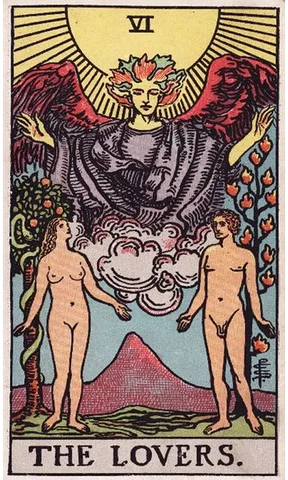
- 9. Hopes and fears — the Lovers (reversed). Hope and fear at once — about genuinely choosing each other again, honestly and consciously, rather than out of inertia.
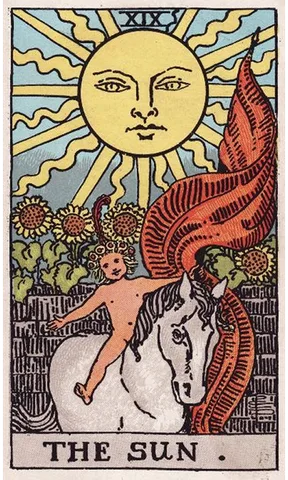
- 10. The outcome — the Sun (upright). The ending is bright: if you're willing to have the honest conversation, the relationship can move to a clearer, warmer level.
Read together: from outside the relationship looks stable (the Ten of Cups), but small unspoken grievances have accumulated because of an old habit of never really settling things (the Five of Swords and the reversed Two of Cups at the foundation). The person asking has withdrawn into their own thoughts (the Hermit), with hope and fear of openly choosing each other fighting inside (the reversed Lovers). But the outcome card — the Sun — says that if they can risk a frank conversation instead of retreating, the relationship has real potential to reach a new level of clarity and warmth.
Note that a single unsettling card in the middle of the spread — the Five of Swords as the obstacle — doesn't make the whole forecast negative. What matters is the picture as a whole and where it finally leads.
Common beginner mistakes
- Reading positions in isolation. The most frequent error is treating each card on its own, as if it were ten small separate readings. The Celtic Cross only works as one story, where the cards explain each other.
- Ignoring the outcome card. Some beginners get so absorbed in analysing obstacles and the past that they forget to look at position 10 — and that's exactly what sets the tone for the whole reading.
- Muddling positions 5 and 6. The possible future and the near future are different things: the first is the general vector and the goal, the second the specific next step. Blur them and you lose the thread.
- Skipping orientation. Reversed cards change or weaken a meaning — there's more on this in “Reversed tarot cards”. Miss that nuance and the whole forecast skews.
- Too general a question. “What's ahead for me?” gets a vague answer. The more specific the question before the deal, the clearer the story.
- Reading while anxious. Ten cards is a complex system, and in a panic it's easy to pull out the wished-for or the frightening reading instead of the honest one. Come back to it calm.
The Celtic Cross online — free, with an interpretation
Laying out ten cards by hand and holding every position in your head isn't easy, especially at first. You can do a Celtic Cross online right now — the cards are drawn honestly and at random, and every position is labelled so you won't get lost. And for a connected, human interpretation of all ten positions for your situation — accounting for how the cards weave into each other — put your question to Mira in the bot: she reads the spread whole rather than card by card.
→ Open the bot and lay out a Celtic Cross
Frequently asked
Is the Celtic Cross hard for a beginner?
Yes — it's one of the more advanced spreads. Ten positions are hard to hold in mind and harder still to tie into one story. Start with a Card of the Day and a three-card spread, and move to the Celtic Cross once the basic meanings are comfortable and you can see the links between cards.
Can I use it for any question?
Technically yes, but it's overkill for simple closed questions. It comes into its own on complicated, layered subjects — relationships, career forks, long-running conflicts. For quick questions a Yes/No spread is more effective.
What if the cards contradict each other?
Contradiction is part of the picture: it often shows an inner conflict, competing motives, or a gap between what you want and what's actually happening. Look at the outcome position and at which tendency wins out overall.
What's the difference between “possible future” and “outcome”?
The fifth position is the general vector the situation is pushing toward on its current course, often with a flavour of conscious intent. The tenth is the final, most likely result of the whole chain — a synthesis of the entire spread.
Do I need the full 78-card deck?
Yes, the Celtic Cross is traditionally dealt from a full deck, Major and Minor Arcana together. Majors-only readings are for simpler, more general spreads; ten positions need the whole depth of the deck.
Can I do it for myself?
Yes, that's standard practice. What matters is staying calm and honest in the interpretation — anxious, it's easy to bend the cards toward the answer you want or the one you dread. If being objective about yourself is hard, it helps to check against an outside reading, from the bot for instance.
How often can I do this spread on the same question?
It isn't a spread for daily repetition. It shows deep dynamics that don't change in a day. Come back to the question after a noticeable interval — weeks or months — or when genuinely new circumstances appear.