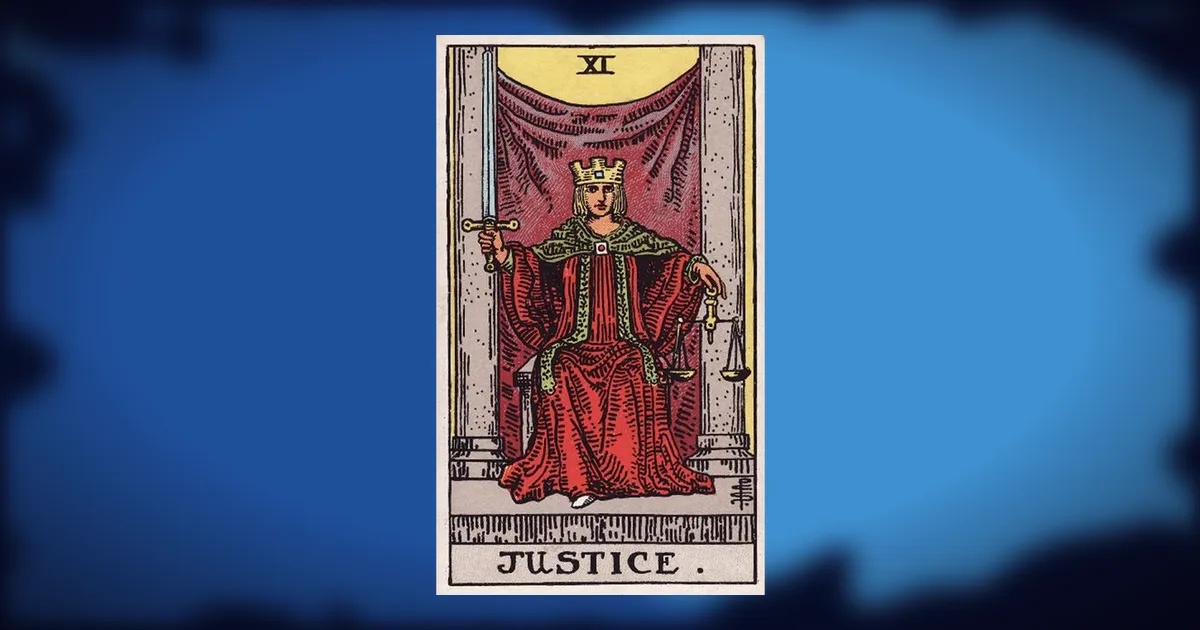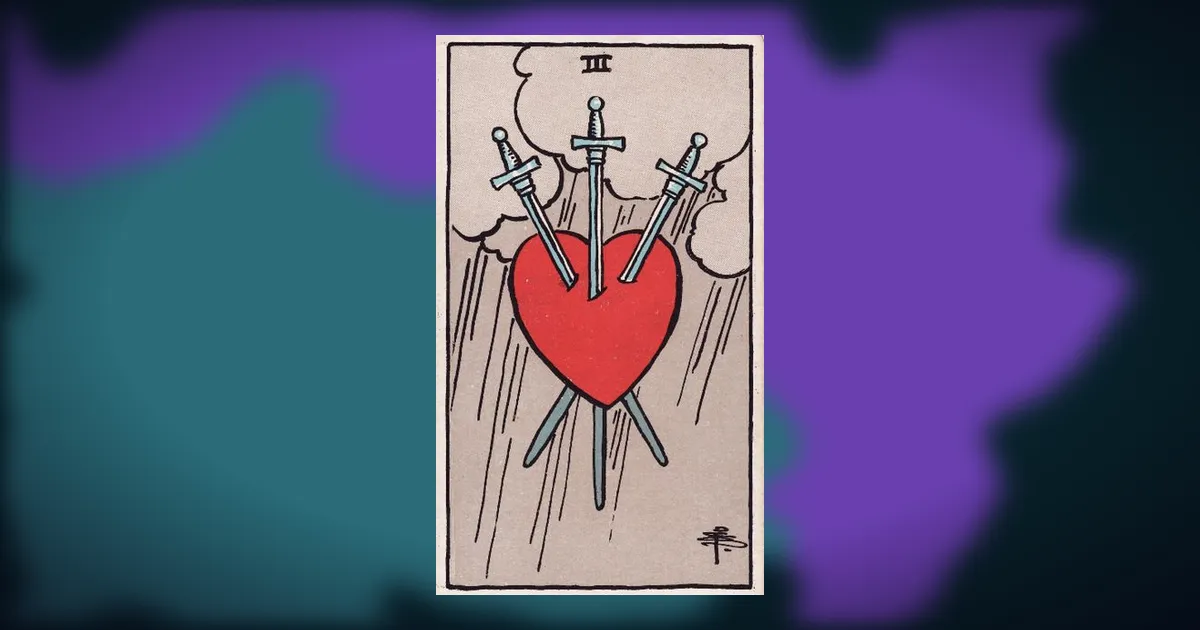
A tarot spread for work and money is one of the most practical things you can bring to the cards: it isn't about mysticism but about a decision — change jobs or stay, take the new project or turn it down, work out why the money has stalled, and see which step is actually within your power. The cards won't give you the winning lottery number or name your future salary — but they are good at honestly showing the strong points of a situation, the risks, and the things you may have stopped noticing in the daily grind. This guide covers when such a spread is genuinely appropriate, how to frame a question about career and money so the answer means something, which spreads suit which situations, what the suit of Pentacles stands for and how it differs from the other suits; it goes through the meanings of the key cards for work questions — encouraging and worrying alike — walks through a step-by-step example of a real career spread, and covers the typical mistakes that stop people getting value out of a reading.
When a work and money spread is genuinely appropriate
Before you shuffle, it's worth asking yourself honestly: what exactly do I want to know? A career and finance spread works well in specific, time-bounded situations — and is nearly useless when it turns into an attempt to peer into the future in general.
Good reasons for a reading:
- you've had an offer for a new job and aren't sure whether to take it;
- a conversation about a promotion or a raise is brewing and you're weighing the moment and the approach;
- you're thinking about leaving your current job but haven't committed;
- you're launching your own project or side business and want to see its strengths and weaknesses;
- your income has been stalled for months and you're trying to work out what's in the way — exhaustion, the wrong strategy, or fear of acting;
- a conflict with management or colleagues is affecting the working atmosphere and you don't know how to handle it.
A request like “when will I be rich?” or “will I win the lottery?”, on the other hand, isn't a tarot question but magical thinking, which the cards don't do. Tarot doesn't replace financial planning, doesn't predict specific sums and can't guarantee wealth — it's a tool for self-reflection that helps you see your situation more clearly and make a decision in the area where you can actually change something.
How to frame a question about career and money
The quality of the answer follows directly from the quality of the question. Make it specific, and make it about something you can influence rather than about external circumstances beyond your control.
Good phrasings
- “Should I accept this job offer?”
- “What would help me increase my income in the near term?”
- “Why has my project stalled and what should I change in my approach?”
- “What should I keep in mind before the conversation about a promotion?”
- “What's the energy in my career right now — grow, or hold my position?”
Phrasings that don't work
- “When will I be rich?” — the cards don't name dates and sums;
- “Will I win the lottery?” — that's a question of luck, not self-reflection, and tarot doesn't apply;
- “Will my boss fire me?” — that's about someone else's will, which you don't influence directly; better to ask what you can do to make your position more secure.
The general principle is simple: the closer the question sits to your sphere of influence and to a concrete decision, the clearer and more practical the answer will be.
Choosing a spread to fit your situation
Different tasks call for different techniques, from a single card to multi-position spreads.
| Spread | For what situation | What it shows |
|---|---|---|
| Card of the day | General background before a working day or an important meeting | What to pay attention to in your affairs today |
| Work spread | An offer, a job change, conflict at work, stalled income | A dedicated read of a career situation |
| Three cards, past–present–future | Understanding the dynamic: where the situation came from and where it's going | The cause, the present state and the likely development |
| Yes/No | A short closed question: “Should I accept the offer?” | A quick, unambiguous marker without the detail |
| The Celtic Cross | A complex, layered situation — changing field, a major decision | The whole picture: causes, environment, fears, outcome |
If you're new to spreads in general, start simple — a card of the day or three cards — and move to fuller techniques gradually. The basic principles of reading are covered in the article “How to read tarot”.
The suit of Pentacles: what it covers
A tarot deck has four Minor Arcana suits, each tied to its own area of life: Wands to energy, initiative and passion, Cups to feelings and relationships, Swords to thought, conflict and clarity of mind, and Pentacles (sometimes called Coins or Discs) to everything material — work, money, physical health, property and the practical results of labour.
Pentacles are the element of Earth: stability, slow but dependable growth, real and tangible consequences of action. If Wands are about catching fire with an idea and Swords about thinking the plan through, Pentacles are about what happens when the idea and the plan turn into a concrete result: a salary, savings, a business built, a skill mastered. That's why the suit of Pentacles is the first thing to look at in a career and finance spread — though cards of other suits and the Major Arcana often add important context too.
The difference between Pentacles and, say, Cups in a money question is fundamental: in this area Cups speak more about satisfaction in the work and emotional engagement, while Pentacles speak about the tangible result — how much was earned, what's been saved, how solid the foundation is. Both sides matter — money without satisfaction burns down into dull routine, and engagement without results doesn't pay the bills — but it's Pentacles that answer for the material outcome.
Card meanings for work and money
Let's go through the key cards that come up most often in career readings: the suit of Pentacles from Ace to Ten, and several telling Major Arcana that read less literally in a money question than they first appear.
| Card | Meaning in a work and money question |
|---|---|
| Ace of Pentacles | A new opportunity, the start of a profitable venture or project — a good moment to begin |
| Two of Pentacles | Balancing several income streams or tasks; the point is not to overload yourself |
| Three of Pentacles | Teamwork, craft recognised, a joint project delivering results |
| Four of Pentacles | Holding on to what's been accumulated, with a risk of over-tightness or fear of letting go of control |
| Five of Pentacles | Temporary difficulty, a shortage of resources — not the best time for risky investments |
| Six of Pentacles | Exchange of resources: help, fair payment for work, a balance of giving and receiving |
| Seven of Pentacles | Assessing the results of the effort invested, a pause before the next step |
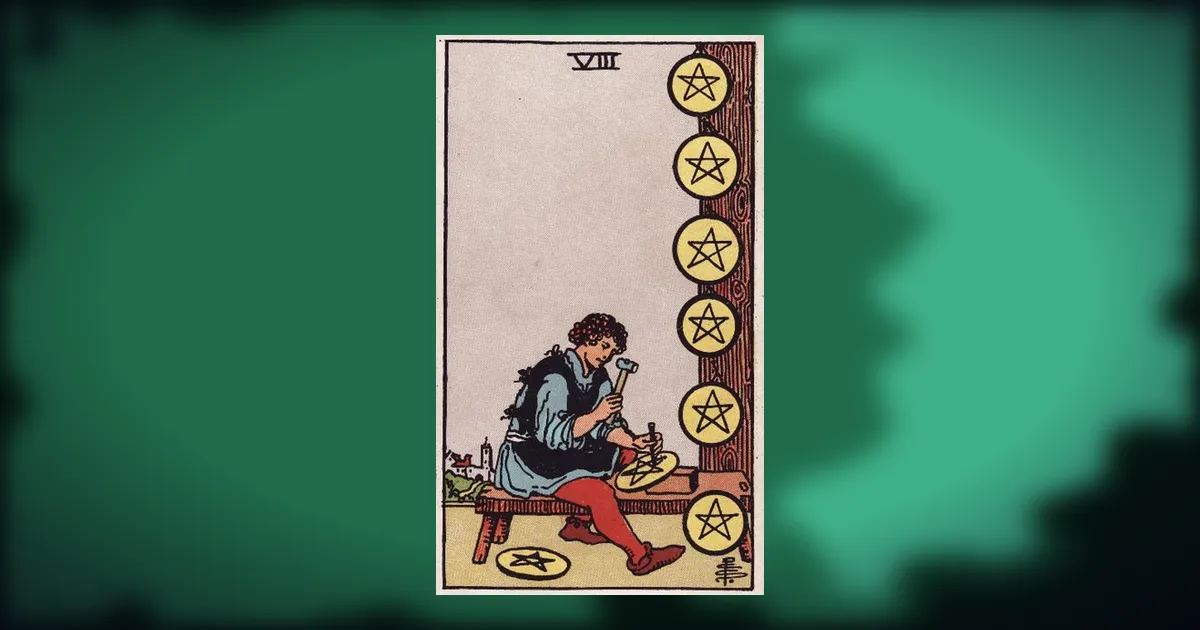
| Eight of Pentacles | Craft, diligent work on a skill; time invested in quality will pay off |
| Nine of Pentacles | Financial independence, comfort, a deserved result of your own effort |
| Ten of Pentacles | Stability, long-term sufficiency, a solid foundation — often the outcome of years of work |
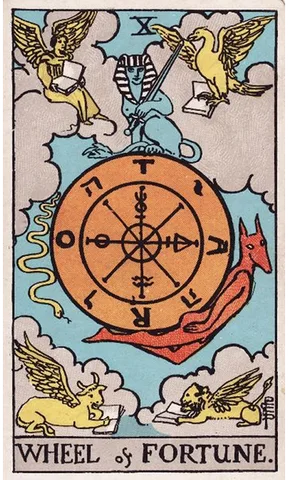
| The Wheel of Fortune | Luck, a turning point, the cycle changing — favourable for career change |
| The Emperor | Structure, discipline, confident management of resources — time to build a system |
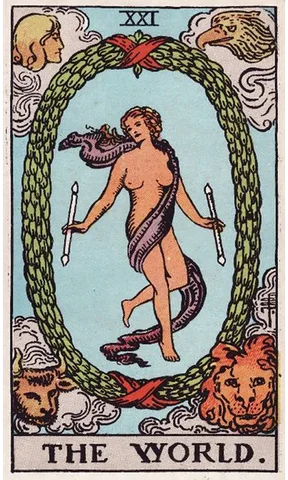
| The World | The close of an important stage, a long project successfully finished, recognition |
| The Devil | Dependence on a job you dislike for the money, toxic conditions, fear of change |
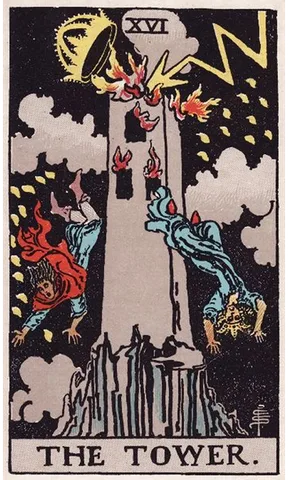
| The Tower | The abrupt collapse of an unstable arrangement — not ruin but release from something that was held together with string anyway |
The Tower deserves a note of its own: in a money spread this card frightens a lot of people, but its honest meaning is different. The Tower rarely means literal catastrophe — more often it points to the collapse of precisely what was built unsoundly in the first place: unstable income with no cushion, work on a verbal promise with no contract, a business plan with no fallback. It's unpleasant in the moment, but essentially it clears the ground for something sturdier.
The Tower in a money question isn't “you'll lose everything” — it's “what was held together with string is finally coming down, and better now than later”.
The Devil follows similar logic: in a career reading this card usually isn't about demons but about dependence — on a disliked but familiar job, on a toxic boss, on the fear of stepping into the unknown even when your current place is stifling you. The card isn't a verdict but a mirror: it shows where you're clinging to the known instead of choosing the better.
Good signs for income growth
If a career and finance spread is dominated by the Ace, Eight, Nine and Ten of Pentacles, the Wheel of Fortune, the Emperor, the World or the Sun, it's a favourable reading. It says: you have the resources, the skills and the right moment, and the result is a matter of time and consistent action rather than luck falling from the sky.
Signals to slow down
The Five of Pentacles, the Four of Swords (exhaustion), the Devil, an unsupported Tower nearby in the spread — these say don't rush into risky decisions right now. That doesn't mean “everything is bad forever”; more often it's a signal to shore up the base first: deal with debts, rest, revise the plan, before making an abrupt career move.
A step-by-step example: three cards on changing jobs
Let's work through a real scenario end to end, from the question to the conclusion.
The situation. Someone has an offer for a new position with a higher salary but in a less familiar field. They're unsure whether to leave a current job that's stable but hasn't grown in a long time.
The question: “Should I accept the new job offer?”
The spread: three cards in the positions “my current situation” — “what the move would give me” — “the likely outcome”.
- Position 1 (current situation): Four of Pentacles. They're holding on to stability, but they've essentially frozen — keeping what they have out of fear of losing it rather than because it brings growth.
- Position 2 (what the move would give): Eight of Pentacles. The new position will mean learning skills from scratch, but it's exactly the kind of work that builds craft — the time invested will pay off professionally.
- Position 3 (likely outcome): the Wheel of Fortune. A turning point, a fortunate alignment, the start of a new cycle — the card is clearly on the side of change.
Reading it as a whole: the current job has turned into a comfort zone without development (Four of Pentacles) — you're holding on to familiarity rather than prospects. The move will demand effort and learning (Eight of Pentacles), but that's precisely the investment in yourself that pays off. And the Wheel of Fortune in the outcome position is a strong argument that this is a good moment to turn: resisting change now will most likely cost more than the move itself.
The upshot: the spread leans towards accepting the offer — but the final decision still belongs to the person, weighing the practical details too: contract terms, probation period, a financial cushion for the transition.
Typical mistakes in work and money readings
- Asking for exact sums and dates. “How much will I earn this year” or “when exactly will my salary go up” — tarot works with tendencies and likely scenarios, not with precise figures and calendars. Such a question is all but guaranteed to give a vague, useless answer.
- Reading instead of acting. A spread can show that the moment is favourable for a job change, but the move itself still needs a CV, interviews and real steps. The cards are a prompt, not a substitute for effort.
- Redealing in search of a nicer answer. If the Five of Pentacles or the Devil came up and you draw again hoping for the Ace, you're devaluing the whole point of the reading, which is honesty rather than comfort at any price.
- Reading too often on the same question. Asking daily “am I really sure I should leave?” blurs the clarity and usually produces contradictory answers, because the situation physically can't change in twenty-four hours.
- Ignoring inconvenient cards. The Four of Pentacles or the Devil in a spread isn't a reason to be upset and forget about it — it's a signal to work out what's really keeping you in place: fear, habit, or a genuine calculation.
A work and money reading online
You can do a tarot work spread right here on the site — free, and whenever a decision comes to a head. If you'd like a live reading of your particular career situation, with its details and nuances, put the question to Mira in the Telegram bot: she'll help lay out the cards and read them with you.
→ Open the bot and ask Mira about work and money
Frequently asked questions
Can tarot tell you an exact salary or the date of a promotion?
No. Tarot shows tendencies, favourable and unfavourable periods and a likely course of action — not specific figures and calendar dates. Any reading promising an exact sum deserves scepticism.
How often can you read on work questions?
Once per clear question, and not again until the situation has actually changed. Repeat readings “just in case” usually confuse the picture rather than clarify it.
What if a “bad” card like the Tower or the Devil comes up?
Don't panic and don't redeal. In work and money questions such cards almost never mean literal catastrophe — more often they're a signal to deal with an unstable situation, or with dependence on a familiar but uncomfortable position, before circumstances deal with it for you.
Is a tarot spread suitable for a question about starting a business?
Yes, it's one of the common requests. Pay particular attention to the suit of Pentacles — it shows how solid the material foundation of the venture is — and to risk cards like the Five of Pentacles or the Devil, which point to where you should hedge in advance.
Can you read about someone else's money — a partner's, for instance?
A reading works more accurately and more ethically on your own situation and your own decisions. If the question concerns a shared budget, it's better framed through yourself: “what do I need to take into account in this financial decision?” rather than trying to read someone else's mind about money.
Does a tarot spread replace financial planning?
No, and it shouldn't. Tarot is a tool for self-reflection that helps you see a situation more clearly and commit to a step, but it won't replace a budget, an emergency fund and real arithmetic. The cards work well alongside a sober practical plan, not instead of one.
Which spread should you choose if the doubt isn't about a specific decision but about a general money slump?
In that case a past–present–future spread is more useful: it shows where the slump came from, what's happening now and where things are heading if the current course holds — and suggests whether something in your approach needs to change. It's also worth reading about what tarot cards mean in general, so you can read a spread more confidently yourself.