The Minor Arcana are 56 of the deck's 78 cards — nearly three quarters of the whole tarot system. They're where most beginners stumble: the Major Arcana are vivid and memorable, each with its own name and character, while the Minors blur into an undifferentiated mass of fours, sevens and baffling Pages. And yet it's the Minor Arcana that supply the specifics: they talk not about destiny in general but about what's happening at work on Monday and why you haven't answered that message for three evenings running. This article covers the logic of the suits, the meaning of the numbers, and the great headache of beginners — the court cards.
How the Minor Arcana differ from the Major
The difference isn't importance, it's scale. The Major Arcana are 22 cards about big themes and turning points: choice, crisis, growing up, fate. We covered them in detail in a separate piece on the meaning of the Major Arcana. The Minor Arcana are 56 cards about ordinary life: a conversation, a task, an anxiety, money, an agreement.
In practice that difference gives you a simple reading rule. If a spread is full of Major Arcana, the situation is large, largely already formed, and what's asked of the person is acceptance and understanding rather than bustle. If Minors dominate, the situation is fluid, it depends on specific actions, and it can absolutely be turned around. A spread of nothing but Minor Arcana almost always means: it's in your hands, there's no “fate” involved here.
The Minor Arcana divide into four suits of 14 cards: ten numbered (ace through ten) and four court cards (Page, Knight, Queen, King).
The four suits: areas of life
The suit answers the question “what is this card even about?”. Each corresponds to an element and its own layer of life — and the correspondence isn't invented for decoration, it matches the logic of the elements in astrology.
Cups — water, feeling and relationship
Everything to do with emotion: love, attachment, friendship, hurt, intuition, inner life. Cups in a spread show what a person feels, not what they do. An abundance of Cups says the situation won't be resolved by logic but at the level of relationship and feeling — and that trying to force it through with arguments probably won't work.
The shadow of the suit is retreating into feelings instead of acting, idealisation, emotional dependency. Reversed Cups often point exactly there: the feeling is present but has no outlet, or is turned inward.
Wands — fire, action and will
Energy, initiative, creativity, ambition, movement towards a goal. Wands answer the question “what do I do?” and almost always push forward. In a spread they mean the situation calls for activity: waiting is pointless, it's time to begin.
The shadow of the suit is busyness, scattering yourself, conflict, action for its own sake. A lot of Wands on a vaguely framed question often means the person is running without knowing where.
Swords — air, thought and words
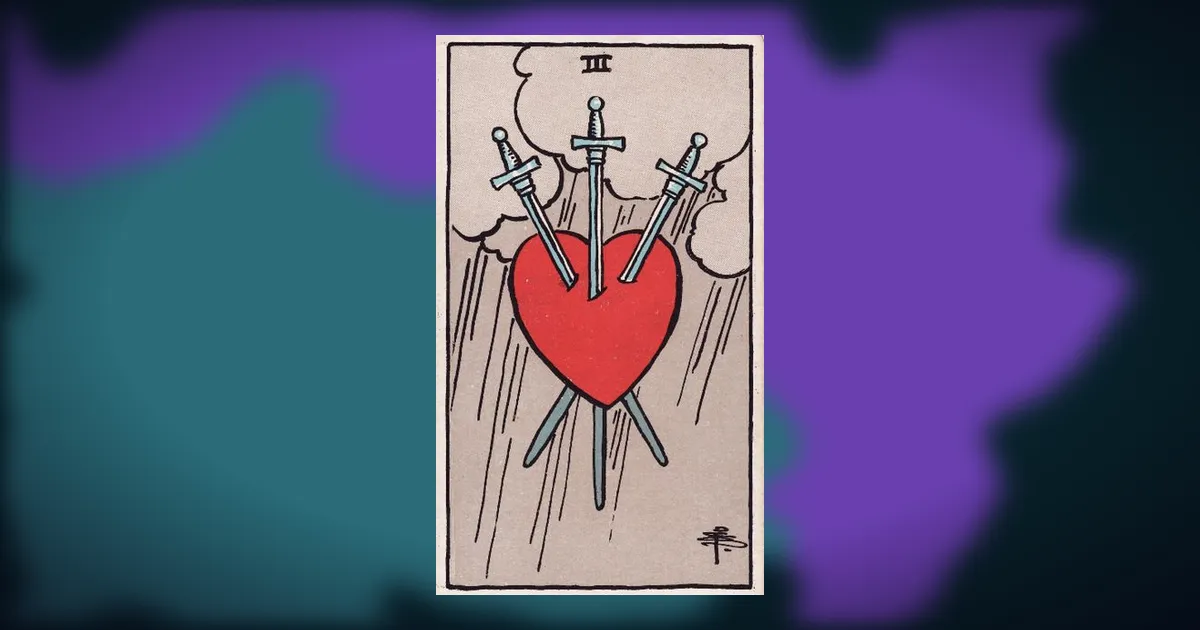
Mind, decisions, conflict, truth, anxiety, communication. Swords are the most unpleasant-looking suit: in the Rider–Waite deck this is where you find pierced hearts, sleepless nights and bound figures. But there's no need to be frightened — Swords describe the work of the mind, not doom: doubts, arguments, the need to call things by their names.
The shadow of the suit is spiralling thoughts, cruelty in words, analysis paralysis. A lot of Swords in a spread is almost always a signal that the problem is largely constructed and lives in the head rather than in reality.
Pentacles (Coins, Discs) — earth, body and matter
Money, work, health, home, everything material and measurable. Pentacles are the slowest and most dependable suit: they describe processes that unfold gradually and produce lasting results. We wrote about the money side in more detail in the piece on readings for work and money.
The shadow of the suit is greed, getting stuck in routine, reducing everything to gain. A lot of Pentacles on a relationship question sometimes means the person is assessing their partner on practical criteria rather than feeling.
The numbers: the stage of the process
The number tells you what stage the thing named by the suit has reached. The logic is the same across all four suits, and it's the single most useful thing a beginner can learn: memorise ten meanings and you get forty cards at once.
Ace — a seed, pure potential, an offer from life. A beginning that hasn't become anything yet.
Two — choice, partnership, the first interaction with someone else.
Three — the first result, growth, other people joining in.
Four — stabilisation, a pause, consolidating what's been achieved. Sometimes stagnation.
Five — crisis, loss, collision. Stability is broken, and that's the point where development happens.
Six — harmonising, help, recovery after the five.
Seven — a test, an illusion, the need to choose for yourself without prompts.
Eight — movement, work, momentum gathered.
Nine — the limit almost reached: the suit at its maximum, in its best or worst form.
Ten — exhaustion and the close of a cycle. There's nowhere further to go along this line.
Test the logic on an example. A five is always a crisis. Five of Cups — a loss in the realm of feeling and the regret that follows. Five of Wands — a clash of interests, an argument. Five of Swords — a conflict with the bitter aftertaste of winning. Five of Pentacles — material shortage. One theme, four different areas. Exact meanings for every card, with illustrations, are in the reference to all 78 cards.
Court cards: the main difficulty
Page, Knight, Queen and King — 16 cards that trip up practically everyone. The reason is that a court card can be read in three different ways, and a beginner doesn't know which to pick.
Way one — a person. The card describes a specific person in your situation: their age, character, role. This works when the question is about a relationship with someone particular.
Way two — a mode of behaviour. The card describes how you're behaving yourself, or how it would be worth behaving. This works when the question is about your own actions.
Way three — the energy of the situation. The card describes the atmosphere and the type of thing happening, with no attachment to people. This works in general readings.
Choose the way by the question, not by the card. If you asked “what sort of person is this beside me?” — read it as a person. If you asked “what should I do?” — read it as a mode of behaviour.
Pages — beginnings, apprenticeship, news
The most junior rank. Pages mean first steps, curiosity, inexperience, and also messages and news. Page of Cups — a budding attraction or a confession. Page of Wands — inspiring news, an invitation. Page of Swords — curiosity, and sometimes gossip and talk behind your back. Page of Pentacles — the start of study, a new job, first earnings.
Knights — movement, drive, excess
Knights are always in motion, and almost always overdoing it: each takes his element to its extreme. Knight of Cups — the romantic who makes beautiful gestures and can be inconstant. Knight of Wands — headlong, easily enthused, doesn't finish what he starts. Knight of Swords — direct to the point of harshness, cuts straight through. Knight of Pentacles — dependable to the point of dullness, slow, but sees things through.
Queens — maturity through acceptance
Queens hold their element from within: they don't fight it, they live in it naturally. Queen of Cups — empathy, a deep grasp of feeling, the ability to console. Queen of Wands — confidence, charisma, leadership without pressure. Queen of Swords — clarity, honesty, the ability to call things by their names. Queen of Pentacles — care through everyday life, resource, reliability.
Kings — maturity through command
Kings hold their element from outside: they direct it and answer for the result. King of Cups — emotional steadiness, the capacity to hold other people's feelings. King of Wands — the entrepreneur, the leader who inspires. King of Swords — the strategist, the law, objectivity. King of Pentacles — substance, practical wisdom, something others can lean on.
How to read Minor Arcana in a spread
Work through a card in three steps, always in the same order.
Step 1. Suit — what this is about. Establish the area: feeling, action, thought or matter. That alone cuts out half the wrong readings.
Step 2. Number or rank — what stage. Beginning, crisis, movement, completion. Or, for a court card, what type of behaviour.
Step 3. Position in the spread — why it's here. The same Four of Pentacles in the “past” position means accumulated stability, while in “what's getting in the way” it means greed and fear of loss. Position flips the sign of a meaning, something we covered in detail in the guide to reading tarot.
Look at the neighbours separately: Minor Arcana depend heavily on context and read well in pairs. We went through the logic of combinations in the piece on card combinations.
Three beginner mistakes
Learning 56 meanings as a list. That's the slowest and least reliable route. Learn four suits and ten numbers — forty cards assemble themselves, and you can add the court cards later.
Being afraid of Swords. The suit looks grim but describes the work of the mind, not doom. The Nine of Swords is a sleepless night and anxious thoughts, not a waking tragedy. More often than not it means someone is tormenting themselves harder than reality requires.
Dismissing the Minors as trivia. Beginners get excited by the Majors and skate past the Minors — and yet the Minors are what answer “what specifically do I do?”. A spread without them gives you a mood but no plan.
Where to start practising
Take one suit per week. Draw a card of the day, and whenever a card of your chosen suit comes up, write down how its theme showed up that day. In a month you'll have covered all four suits and will understand them from your own experience rather than from a textbook — which is a fundamentally different quality of reading.
If you don't have a deck yet, or you'd like to check an interpretation, you can put the question to Mira, our AI tarot reader: she'll lay out the cards and explain why each one landed in that particular position. Her handling of the Minor Arcana is detailed — grounded in suit, number and the context of the neighbouring cards.