Your personal arcanum is one of the 22 Major Arcana of the tarot, fixed to you by your date of birth and yours for life. It goes by several names — birth card, arcanum of destiny, personal card — but it's calculated the same way everywhere, and you can work it out in a minute on a scrap of paper. Unlike the card of the day, which changes every twenty-four hours, your personal arcanum is single and permanent: it isn't a forecast but a description of character and of the theme a person works through one way or another all their life. This article gives the exact formula with worked examples, what to do when the total comes to more than 22, the meanings of all 22 arcana as personal cards, the honest limits of the method, and the difference between a personal arcanum, a card of the day and a life path number.
What a personal arcanum is, and how it differs from a card of the day
A tarot deck holds 22 Major Arcana, from the Fool to the World. These are the system's largest images: not everyday situations but archetypes, the big human storylines. The idea behind the personal arcanum is simple: reduce a date of birth to a number within the range of those 22 cards, and you get an image describing not the current day but the person — their make-up, their strength and their characteristic difficulty.
Three things get confused constantly here, so let's separate them at once:
- The personal arcanum — one for life, calculated from the date of birth. About character and the central theme.
- The card of the day — a new one every day, drawn at random. About mood and where to place your attention today.
- The life path number — also from the date of birth, but reduced to 1–9 by the rules of numerology, without cards. About the direction of a life.
The personal arcanum sits somewhere between the first and the third: calculated as a number, read as an image. That's precisely why people take to it more readily than to dry numerology — a card has a picture, a story, a figure, and it's easier to try on for size.
How to calculate your personal arcanum: the formula and examples
All you need is a date of birth. Unlike a natal chart, neither the time nor the place is used here.
- Write the date out in full — day, month and all four digits of the year.
- Add every digit separately, as digits rather than as numbers.
- If the total is greater than 22 — add the digits of the result again.
- Repeat until you have a number between 1 and 22.
- Find the arcanum with that number. If you got exactly 22, that's the Fool, the zero card.
Example 1: 15 July 1990
1 + 5 + 0 + 7 + 1 + 9 + 9 + 0 = 32. That's more than 22, so we continue: 3 + 2 = 5. The personal arcanum is 5, the Hierophant.
Example 2: 14 May 2003
1 + 4 + 0 + 5 + 2 + 0 + 0 + 3 = 15. Already in range, no reduction needed. The personal arcanum is 15, the Devil. A deliberately uncomfortable example — below I explain why the Devil in this position is no verdict.
Example 3: 9 September 1979
0 + 9 + 0 + 9 + 1 + 9 + 7 + 9 = 44, then 4 + 4 = 8. The personal arcanum is 8, Strength.
Example 4: 31 December 1995
3 + 1 + 1 + 2 + 1 + 9 + 9 + 5 = 31, then 3 + 1 = 4. The personal arcanum is 4, the Emperor.
Why 22, and what to do with larger totals
The 1–22 range isn't arbitrary: that's how many Major Arcana there are. The digit sum of any real date of birth falls roughly between 4 and 45, so one or two reductions are always enough.
There's a wrinkle with the number 22 that makes answers online disagree. In the classical numbering of the Major Arcana the Fool stands at zero and the last card, the World, at 21. There is formally no twenty-second card: 22 is the total count, not a number. So when the calculation gives exactly 22, it loops back to the start of the circle: your card is the Fool. That's how our calculator works, and how most schools do it.
You'll sometimes meet another approach that reduces all the way to a single digit (1–9), as in numerology. That isn't a personal arcanum any more but a life path number — we covered it separately in the article on the life path number. They shouldn't be mixed up: different ranges, different meaning.
The meanings of all 22 arcana as a personal card
Below is a short reading of each arcanum specifically in the role of a personal card: the strength and the characteristic difficulty. Full meanings for every card with illustrations are in the reference to all 78 cards, and a detailed treatment of the Major Arcana is in the article on the meaning of the Major Arcana.
| No. | Arcanum | Strength | What comes harder |
|---|---|---|---|
| 0 / 22 | The Fool | Freedom, lightness, the knack of starting from nothing | Finishing; reckoning with consequences |
| 1 | The Magician | Will, turning an idea into a thing | Admitting that not everything is in their power |
| 2 | The High Priestess | Intuition, depth, the ability to keep silent | Speaking plainly instead of in hints |
| 3 | The Empress | Care, creativity, abundance | Not dissolving into other people |
| 4 | The Emperor | Structure, reliability, responsibility | Flexibility; letting go of control |
| 5 | The Hierophant | Mentorship, values, the gift of explaining | Not turning rules into dogma |
| 6 | The Lovers | Choosing with the heart; bringing people together | Deciding rather than weighing forever |
| 7 | The Chariot | Drive, momentum, victory | Stopping, and hearing others |
| 8 | Strength | Gentle mastery of oneself, quiet courage | Admitting their own tiredness |
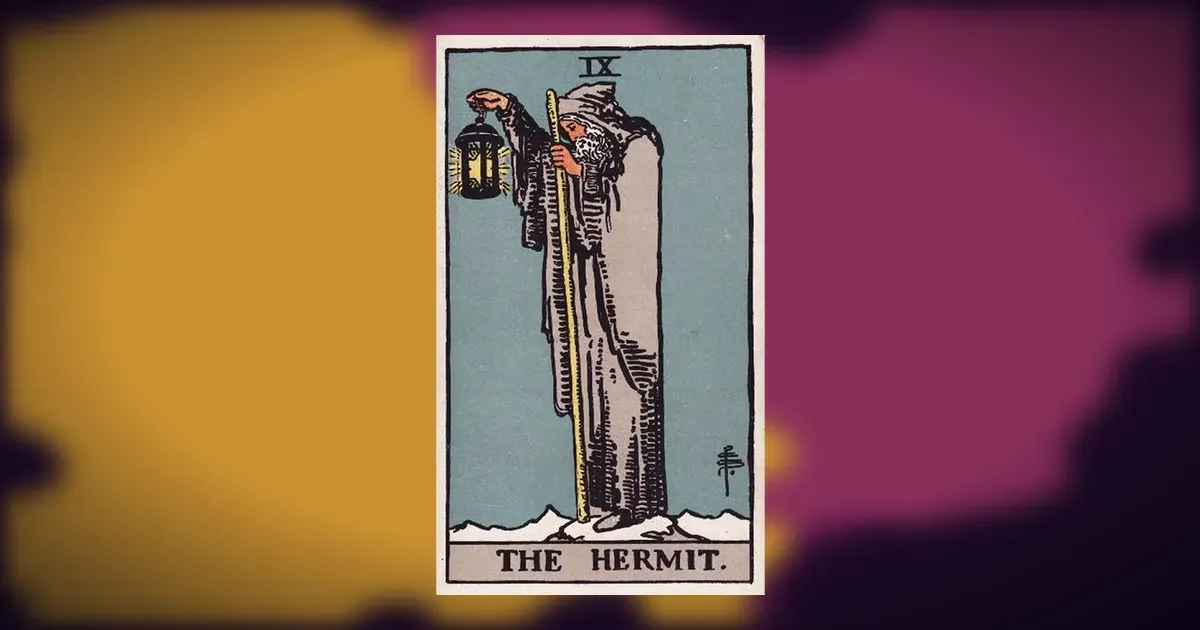
| 9 | The Hermit | Depth, self-reliance, honesty with oneself | Not retreating into isolation from pain |
| 10 | The Wheel of Fortune | A sense of timing, catching the wave | Steadiness once the wave has gone |
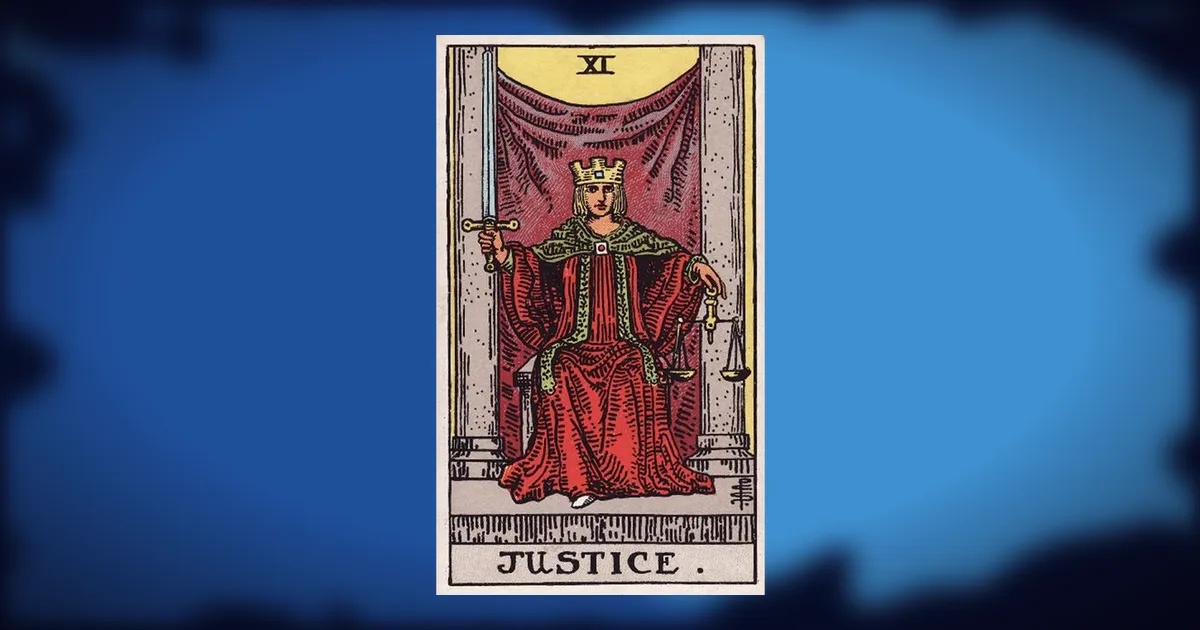
| 11 | Justice | Honesty, clarity, seeing the essence | Forgiving — themselves first of all |
| 12 | The Hanged Man | Seeing differently; patience in a pause | Not getting stuck waiting for years |
| 13 | Death | The capacity to finish and begin again | Gentleness towards those who change slower |
| 14 | Temperance | Balance, a sense of measure, healing | Allowing themselves brightness and risk |
| 15 | The Devil | Magnetism, honesty about desire, living passion | Telling attachment from dependency |
| 16 | The Tower | Surviving upheaval and telling the truth | Building slowly, not only demolishing |
| 17 | The Star | Hope, inspiration, a gift for consoling | Returning from the dream to the work |
| 18 | The Moon | Subtlety, imagination, a nose for the hidden | Telling a hunch from anxiety |
| 19 | The Sun | Warmth, generosity, lighting others up | Owning their shadow and their weakness |
| 20 | Judgement | A capacity for reappraisal and second chances | Judging less harshly — others and themselves |
| 21 | The World | Wholeness, breadth of view, completion | Starting over once the circle closes |
Which arcana come up most often
The digit sums of birth dates aren't evenly distributed, so some arcana appear noticeably more often than others. For people born in the twentieth century the totals most often land between 4 and 9 — the Emperor, the Hierophant, the Lovers, the Chariot, Strength and the Hermit. That's exactly why the eighth arcanum is asked about so often: Strength comes up for a great many people.
Arcanum 8, Strength, is one of the most rewarding personal cards. It isn't about physical might: in the image a woman holds a lion calmly, without fighting it. It's about power over oneself without violence towards oneself, about courage that doesn't shout. People with this arcanum can hold other people's emotions and often become the ones others come to for support. Their weak spot lies in the same place: they don't notice their own exhaustion until it's visible from outside.
Numbers closer to 20 — Judgement, the World, the Star — are rarer, because they need a large digit sum. That doesn't make them «better»: the rarity of an arcanum says nothing about its power, only about calendar arithmetic.
A personal arcanum describes not what will happen to you but what you habitually bring into any situation. It isn't a script — it's a way of walking.
What if you got a «heavy» arcanum
This is the most common fright, and it's almost always needless. The Devil, the Tower, Death, the Moon, the Hanged Man — in the role of a personal card they read quite differently from how they read in a spread about a specific situation.
The Devil (15) as a personal arcanum isn't about evil but about the force of desire. Such a person admits what they want more honestly than most, carries magnetism and knows how to enjoy life. Their task is to tell living attachment from dependency, not to renounce passion.
Death (13) is about the ability to finish. People with this arcanum weather change more easily than others and can begin again where the rest cling to the past. The card has nothing whatever to do with lifespan.
The Tower (16) is about truth and resilience under collapse. Such a person says what others go around, and survives where a smoother construction breaks.
The Moon (18) is about fineness of perception. Strong intuition, rich imagination, a nose for the unsaid. The flip side is a tendency to fill gaps with the worst case.
How to use your personal arcanum in practice
Knowing the number is half the job. What comes next is the reason people calculate it at all.
Look at your card properly. Find the image and simply study it: what the figure is doing, where they're looking, what they hold. Your first reaction — irritation, recognition, awkwardness — is already information.
Find the part of the description you disagree with. That's usually where the arcanum's shadow sits: what we don't admit in ourselves is described most accurately.
Test it against your past. Recall two or three turning points and look at how the card's theme showed up in them. A personal arcanum is more visible in a biography than in a single day.
Hold it as a compass, not a label. The Hermit's arcanum doesn't mean you're fated to be alone. It means the theme of self-reliance and inner search sounds louder in your life than in most.
Your arcanum alongside other methods
A personal card works well next to other tools — but each answers its own question.
| Method | What it needs | What it answers |
|---|---|---|
| Personal arcanum | Date of birth | What I'm like by make-up; my recurring theme |
| Life path number | Date of birth | Where the life path leads |
| Destiny matrix | Date of birth | 22 positions: family, karma, purpose |
| Natal chart | Date, time and place | The fullest portrait, unique to you |
| Card of the day | Nothing — drawn at random | What to look at specifically today |
A sensible order for a beginner: the personal arcanum first — it takes a minute and gives a recognisable image. Then a numerology profile if you want figures. And only then a natal chart, if the subject has really taken hold: it's the most precise of them and the hardest to read.
The limits of the method — honestly
A personal arcanum is calculated from the date alone, which means everyone born on the same day shares one. That's millions of people worldwide, and they are plainly not identical. The method describes not a whole personality but one layer of it — a fairly visible layer, but not the only one.
Second: the method has no ancient pedigree. Deriving a birth card from a digit sum took shape in the twentieth century along with the modern school of tarot, and different authors give different reduction rules. We give the most widespread one.
Third and most important: an arcanum predetermines nothing. It doesn't forbid or permit, promise or threaten. It's a language for talking about yourself, not a timetable of fate.
Find your arcanum in a minute
You don't have to do the arithmetic by hand. Open the personal arcanum calculator, enter your date of birth, and you'll see your card along with the full chain of the calculation, so it's clear where the result came from.
And if you'd like a living reading — what your arcanum means for you specifically, where your strength lies and what's worth working on — ask Mira in the bot. She'll look at the card together with your zodiac sign and the numbers in your date, rather than handing you a generic description from a reference.
→ Open the bot and find your arcanum with Mira
Frequently asked questions
What's the quickest way to find my arcanum from my date of birth?
Add up every digit of your date of birth separately and reduce the total to a number between 1 and 22. That number is the number of your Major Arcanum. If you'd rather not do it by hand, use the calculator on the personal arcanum page — it shows the whole chain.
Can a personal arcanum change?
No. It's calculated from your date of birth, and the date doesn't change. What changes is how a person expresses their card: with age the light side of an arcanum usually sounds stronger and the shadow side better worked through.
What does it mean if I got the number 22?
Your card is the Fool. In the classical numbering of the Major Arcana the Fool stands at zero, and 22 is the total number of cards, so the calculation loops back to the start of the circle.
Are a personal arcanum and a card of the day the same thing?
No. A personal arcanum is one for life and comes from your date of birth. A card of the day is drawn at random and changes daily: it's about the mood of one particular day, not about character.
Does birth time affect the personal arcanum?
No, this method uses only the date. Time and place of birth are needed for a natal chart, where the Ascendant and houses depend on them; the arcanum calculation doesn't touch them.
What if the arcanum doesn't sound like me at all?
Read the description of the card's shadow side. A mismatch usually means you recognise yourself in the light part and don't own the shadow — or the other way round. The other possibility is that other layers of your portrait are strongly marked, and then a natal chart will be more accurate.
Can I calculate someone else's personal arcanum?
Yes, all you need is their date of birth. It's common practice: a partner's or a child's arcanum helps you understand how they're put together. Just don't turn it into a label — the card describes a tendency, not the limits of what someone can do.