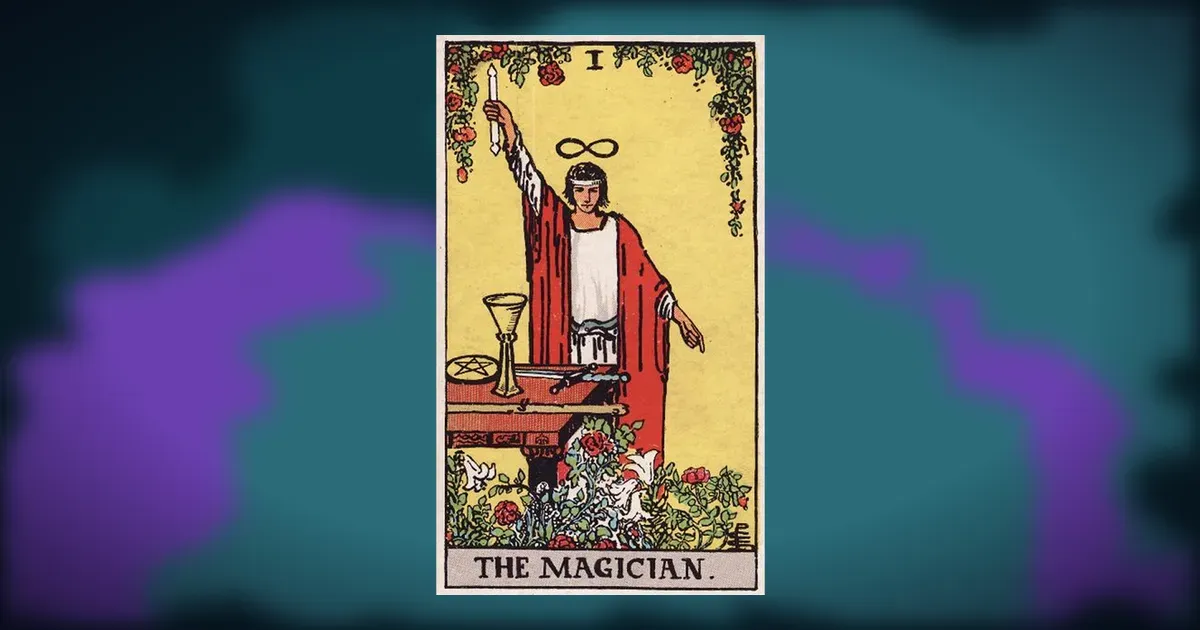
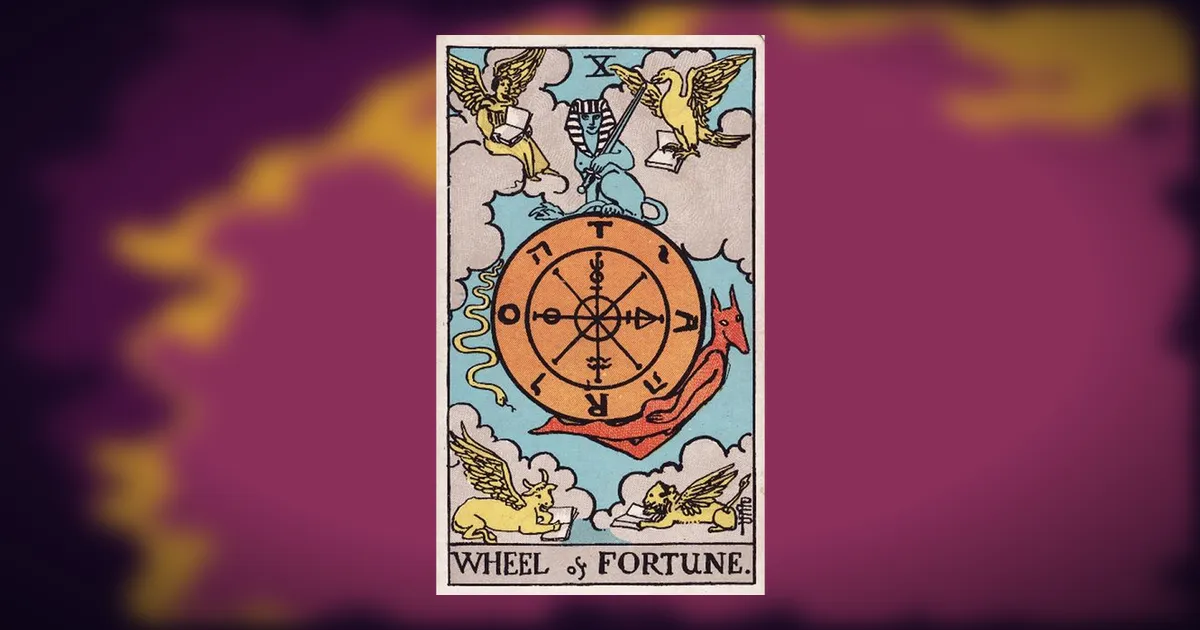
The destiny matrix is a method in which a date of birth is laid out into a diagram of two overlaid squares and turned into a set of numbers from 1 to 22. Each number is the number of a Major Arcanum of the tarot, so it carries an image as well as a value. That's where its popularity comes from: instead of an abstract “destiny number” you get a picture with a story in it.
There's also a lot of confusion around the matrix: sources disagree about the rules for reducing numbers, and interpretations are often written in the register of “you are fated to…”. Let's go through the method as it actually works — with formulas, a worked example and honest caveats.
Where the method comes from
The destiny matrix is a young method: it took shape in the 2000s and is assembled from older parts. Its numerical logic comes from numerology, its imagery from the 22 Major Arcana of the tarot, and the two-square diagram (the octagram) nods to traditional symbolism of the cardinal directions and the elements.
It's worth saying plainly, without illusions: the matrix has no millennia-long history the way astrology does, and there's no single canon — schools differ on the details of the calculation and especially on interpretation. The value of the method isn't its antiquity but something else: it gives you a compact language for talking about yourself. Twenty-two images are enough to describe a character and few enough not to drown in.
How to calculate a destiny matrix
All you need is a date of birth. Unlike a natal chart, the time and place aren't used — which is both an advantage (anyone can run the calculation) and a limitation (two people born on the same day get the same matrix).
The rule for reducing numbers
This is the main sticking point. Every value has to land in the range 1 to 22, matching the number of Major Arcana. If a number is larger than 22, it's reduced by adding its digits: 30 becomes 3+0 = 3, and 24 becomes 2+4 = 6.
Some sources give a different rule — subtract 22. That's a mistake: the results diverge, and checking against reference calculators shows that adding the digits is the correct operation. For 30, addition gives 3 and subtraction gives 8, and from there the whole matrix drifts apart.
The four base numbers
Every calculation starts with these — the corners of the upright square:
Day of birth — the day number, reduced to 1–22. It covers personal qualities: what a person arrives with and what's immediately noticeable about them.
Month of birth — the number of the month. Talents and abilities, the things that come easily.
Year of birth — the sum of all four digits of the year, reduced to 1–22. The task of the current incarnation, the theme to be worked through.
The karmic tail — the sum of the first three numbers. What a person brings with them unresolved: a habitual way of reacting that once helped and now gets in the way.
The centre
The sum of all four base numbers, reduced to 1–22. This is the matrix's principal energy and the first thing to look at: the centre describes the main storyline of a life, the thing everything else comes back to one way or another. If you haven't time to work through the whole matrix, look at the centre — it gives you more than half the picture.
A worked example: 14 May 2003
Step by step, so the scheme stops being an abstraction.
Day: 14 — already in range, no reduction needed. Arcanum 14 is Temperance.
Month: 5 — the Hierophant.
Year: 2+0+0+3 = 5 — the Hierophant again.
Karmic tail: 14 + 5 + 5 = 24, reduced: 2+4 = 6 — the Lovers.
Centre: 14 + 5 + 5 + 6 = 30, reduced: 3+0 = 3 — the Empress.
Five numbers already make a coherent portrait: someone with a need for balance (Temperance), a strong theme of mentorship and rules (the Hierophant twice — a rare reinforcement), a karmic knot in the area of choice and relationships (the Lovers) and a central energy of care and creation (the Empress).
Note the repetition: when the same number turns up in two positions, its theme sounds louder in that person's life than the rest. That's the first thing to look for in a finished matrix.
The diagonals and the family lines
The second square is the diagonal one; its corners come from adding neighbouring points of the upright square. It covers ancestral programmes — what came from the family rather than forming personally.
The female family line — the sum of the upper and lower diagonal points. It shows what's passed down the maternal line: how you feel things, how you care, how you build a home.
The male family line — the sum of the right and left points. Attitudes to work, money, responsibility and protection.
In practice the family lines are the most interesting part of the matrix. This is usually where the recognisable stuff surfaces: “everyone in our family is like that”, “my mother said exactly the same thing”. An ancestral programme isn't a sentence, but until it's named it runs automatically.
Heaven and Earth
Two axes running through the centre.
The Earth line (day + year) — the material side: body, money, work, everything tangible. It shows how a person realises themselves in the real world.
The Heaven line (month + karma) — the spiritual side: meanings, values, what it's all for. It's the source of inner support.
A gap between these two lines explains a feeling many people know: everything has come together on the outside, and there's still no satisfaction. Usually that means the Earth line is fulfilled and the Heaven line isn't.
The four levels of purpose
The most discussed part of the matrix. Purpose here isn't singular but fourfold, and the four unfold across the ages like stages.
Personal (Heaven + Earth) — the task of the first half of life, roughly up to forty. Sorting yourself out: character, fears, habits.
Social (female + male lines) — working with people and with your place among them, roughly from twenty to sixty.
General (personal + social) — what becomes central closer to maturity: the meaning a person passes on.
Planetary — the broadest level. Not everyone reaches it, and it isn't an obligatory programme, whatever some interpretations claim.
An honest caveat: “purpose” in the matrix isn't a profession and isn't a ready answer to “what should I be?”. It's a theme, a tone, a direction. The Hierophant in a purpose position means passing on knowledge — whether someone becomes a teacher, an editor, a mentor at their company or a coach isn't a question the matrix answers.
How to read a matrix without doing yourself harm
The method produces a lot of numbers, and that's its main trap: it's easy to drown in twenty-two meanings and read your own fears into them.
Start with the centre. It sets the frame everything else is read inside. The same number sounds different in different matrices precisely because of the centre.
Look for repeats. A number that appears two or three times is the person's loudest theme. If the Tower stands in three positions, the conversation is going to be about abrupt change, and that matters more than picking apart every point separately.
Don't read the “heavy” arcana as a verdict. The Devil in a matrix isn't a curse but a theme of dependency and attachment: it can show up as an addiction and equally as a deep understanding of other people. Death is about the capacity to finish things. The Tower is about the ability to live through a collapse. We wrote about this in detail in the piece on the meaning of the Major Arcana.
Remember the method's limit. The matrix is built on the date alone, so everyone born on the same day has an identical one. It's a tool for talking about yourself, not a description of a particular biography.
Matrix, numerology and natal chart: the difference
The three methods are often confused, though they answer different questions.
Numerology reduces the date to one or two numbers. Fast, simple, shallow — a good way in.
The destiny matrix unfolds the same date into twenty-two images and adds themes of family and purpose. Deeper than numerology, but still resting on the birth date alone.
A natal chart also uses the time and place of birth, so two people never get the same one. It's the most precise of the three and the hardest to read.
A sensible order: the life path number to try the idea, the matrix to get a language and images, the natal chart if the subject really has you hooked.
Where to start
Calculate your matrix and look at just two positions first: the centre and the karmic tail. The centre tells you what comes naturally; the tail tells you what gets in the way. That's enough for the first week — the remaining numbers are better taken one at a time, checked against what's actually happening in your life.
The destiny matrix calculator on Tarotari works out every position using verified formulas, shows the diagram and names the arcana, and Mira, our AI tarot reader, walks through the resulting picture in words — without fatalism and without promises the method can't deliver.