Dream interpretation isn't a matter of looking up a ready-made meaning in a book of symbols but of unpacking a personal message that your own subconscious wrote to you overnight, while your mind was off duty. The dream came to you, with your images, your fear and your joy — which is why an apparently identical plot can mean opposite things for two different people. This detailed guide covers why universal dream dictionaries miss so often, how to analyse a dream properly step by step, what the commonest images mean — water, flying, being chased, teeth falling out, an exam, being naked in public — how dreams and the subconscious are connected without the pseudo-science, and, through a real example, how to take an interpretation all the way to a concrete, usable conclusion.
Why universal dream dictionaries usually don't work
Nearly everyone has at some point wanted to open a dream dictionary and find the exact meaning of what they dreamt. The trouble is that a dream dictionary is by nature an averaged reference, compiled with no idea whatever about your life, your childhood, your personal language of images. It says “a snake means enemies” or “water means tears” and stops there, as if all people shared one dictionary of symbols. They don't.
Take the image of a dog. For someone who grew up with a beloved dog, a dog in a dream most likely means warmth, loyalty, safety. For someone bitten as a child, the same image means anxiety and threat. A dictionary can't know your personal history — it issues one “correct” meaning for everyone, which is exactly why a book interpretation so often feels imprecise, as if it weren't about you.
Then there's context. A dream about losing a tooth at the dentist's, the night before an actual dental appointment, is most likely just a reflection of ordinary worry about the visit. The same dream recurring for weeks with no dental connection is a different signal — perhaps anxiety about your own attractiveness, or about having said too much. One symbol, and context changes the meaning entirely. A dictionary can't see context at all — it works with a picture detached from your life.
The third reason for their imprecision is that dream dictionaries usually ignore emotion. And emotion in a dream is arguably the main carrier of meaning, more important than the plot. There's more on that below, but the general conclusion is this: dictionaries are useful as a starting point, a light prompt, a direction for thought — not as a final answer. Treat them as a thesaurus, not a verdict.
What actually matters when working through a dream
The emotion matters more than the plot
If you had to pick a single rule of dream interpretation, it would be this: ask not “what did I dream?” but “what did I feel while I dreamt it?”. The same plot with a different emotional colour means different things. Flying with a sense of delight and lightness is about freedom and self-confidence. The same flight with a sense of panic, of being about to fall, is about fear of losing control — not the joy of release at all. Identical plot, opposite meaning.
Emotion is what the brain keeps from a dream longest after waking. Even when the details have gone, you often remember the overall sensation: it was anxious, it was calm, it was shameful. Start your analysis there — the emotional tone almost always points to the dream's theme more accurately than the visual details.
Who was in the dream
People in dreams are rarely literally themselves. More often they stand for a quality, an attitude or a role you associate with them. Your mother in a dream may not be literally your mother but the voice of care — or, conversely, of control — depending on what that figure means to you personally. An ex-partner appearing years after a break-up usually isn't about wanting them back but about a particular relationship pattern or an unfinished theme they embody for you.
A useful question: “What single word would I use to describe this person?” The answer — “strict”, “dependable”, “unpredictable” — is often the dream's theme, disguised as a specific face.
Day of the week and lunar phase — don't over-weight them
There's a tradition of tying a dream's content to the day of the week or the phase of the Moon — the belief, for instance, that dreams at new moon are more symbolic, or that those before dawn on a Thursday come true more reliably. Take it calmly, without dogma: as a light additional marker rather than a system with hard rules. What matters far more than when you dreamt something is what was going on in your life the day before and what emotion stayed with you after waking. If you enjoy tracking the link between dreams and the lunar cycle, it can be a pleasant self-observation practice — just don't build final conclusions on it.
Keep a dream journal
This is the most practical advice of all. Keep a notebook or a note on your phone by the bed and write the dream down as soon as you wake, before the details dissolve — you usually have only a few minutes. There's no need to write it up nicely: the key images, the emotion and a couple of lines about the plot are enough.
After two or three weeks, open the notes and read them through. Almost always a pattern emerges: a recurring image, a similar emotion, the same theme in different costumes. That isn't coincidence, it's a signal from the subconscious worth taking seriously.
The key-question method: working through a dream yourself
Instead of leafing through a dictionary for a ready answer, ask yourself a sequence of questions. This method works for any dream, whatever the plot.
- What did I feel in the dream? Name the emotion in one or two words: fear, shame, delight, confusion, relief.
- Where and when have I felt something similar in waking life — recently? Look for a match in emotion, not a literal match in plot.
- Who and what was in the dream — and what do they symbolise for me? Not the general dictionary meaning but your personal association.
- What would change if I could control the dream? This question shows what you're missing in waking life — control, support, the courage to say no.
- What is this dream about if I strip out the fantastical details and tell it as a one-sentence metaphor? For example: “I'm running from something I'm afraid to face” — and then ask yourself what exactly you're running from in reality.
Work through those five questions and you'll almost always get a more precise and more personal answer than any dictionary could have given you.
Common dream symbols
What follows isn't a set of hard rules but starting points for thought. Always check the general meaning against your personal context and the emotion you felt.
| Image | Usually about | What to look at |
|---|---|---|
| Water | Your emotional state overall | Clear and calm — harmony; murky, turbulent, flooding — accumulated feelings that haven't been lived through |
| Flying | Freedom, control over the situation | Light and joyful — self-confidence; panicked — fear of losing control |
| Being chased | Avoiding a problem or a conversation | Who's chasing, and what you're running from in life — a better question than the plot itself |
| Teeth falling out | Anxiety about appearance, age, words | Common around public speaking, important conversations, shifts in self-esteem |
| Naked in public | Vulnerability, fear of judgement | Ask yourself where you currently feel “seen through” |
| An exam, or being late for one | Self-esteem, fear of not measuring up | Dreamt less by students than by people awaiting an external verdict on their work |
| Death in a dream | Almost never a literal prediction | Usually a symbol of a stage ending, of transformation, of an old role finishing |
| Money | Your sense of your own worth and resource | Finding money — a surge of confidence; losing it — fear of shortage or depletion |
| A wedding | Union, commitment, a new stage | Not necessarily about a relationship — can be about two parts of yourself merging, or a project starting |
| Pregnancy | Something new taking shape | Often dreamt before starting a project, a move or an important decision — not necessarily about children |
Notice that in nearly every row the meaning opens up through a question to yourself rather than a ready-made phrase. That's deliberate: the symbol sets a direction for the search, and the precise answer is found only where the image intersects with your current life.
You don't dream of being chased because someone is literally pursuing you — more often it's because you're avoiding something in waking life: a difficult conversation, a decision, an admission. Ask not “who was chasing me?” but “what have I been running from these past weeks?”.
How dreams and the subconscious connect — without the pseudo-science
You don't need to go deep into theory to use dreams practically. A simple working picture is enough: during the day we filter impressions, emotions and thoughts — some we work through, some we shelve for later, some we deliberately don't notice because it's inconvenient or painful. At night that filter weakens and what was shelved surfaces — not as text but as images, metaphors and plots.
That's why a dream often speaks about something you already know somewhere deep down but haven't yet admitted to yourself outright. It doesn't “predict the future”; it honestly shows the present — what you feel but haven't yet put into words. That's where the value of dream interpretation lies: not in mysticism but in helping you get to the truth about yourself faster, past the usual defences and self-deception.
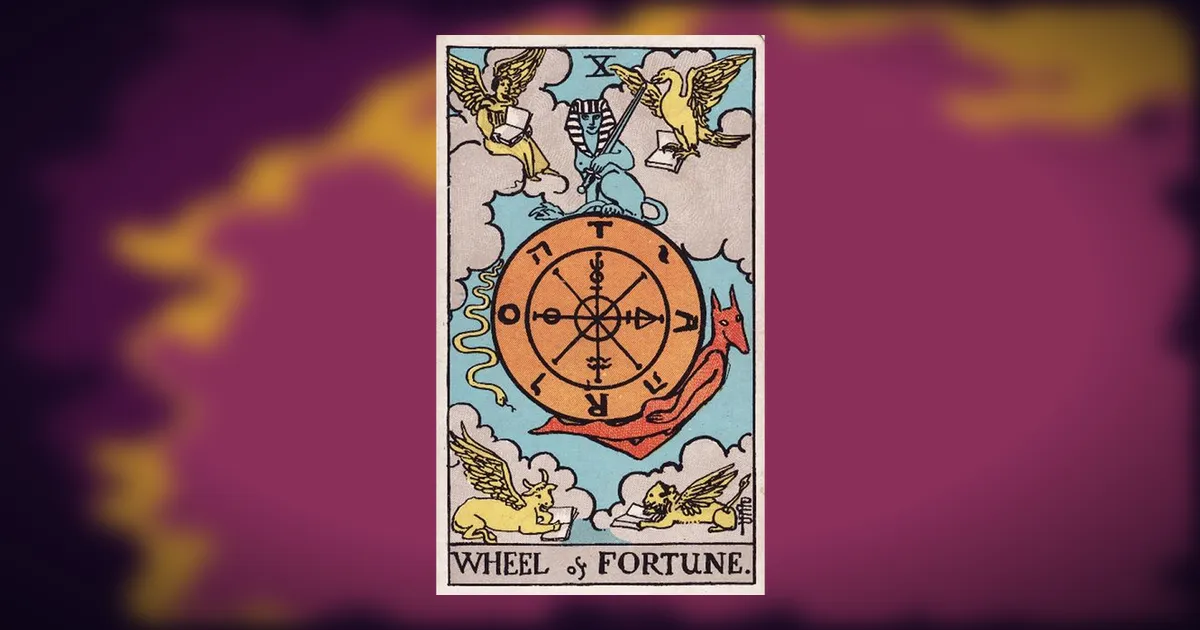
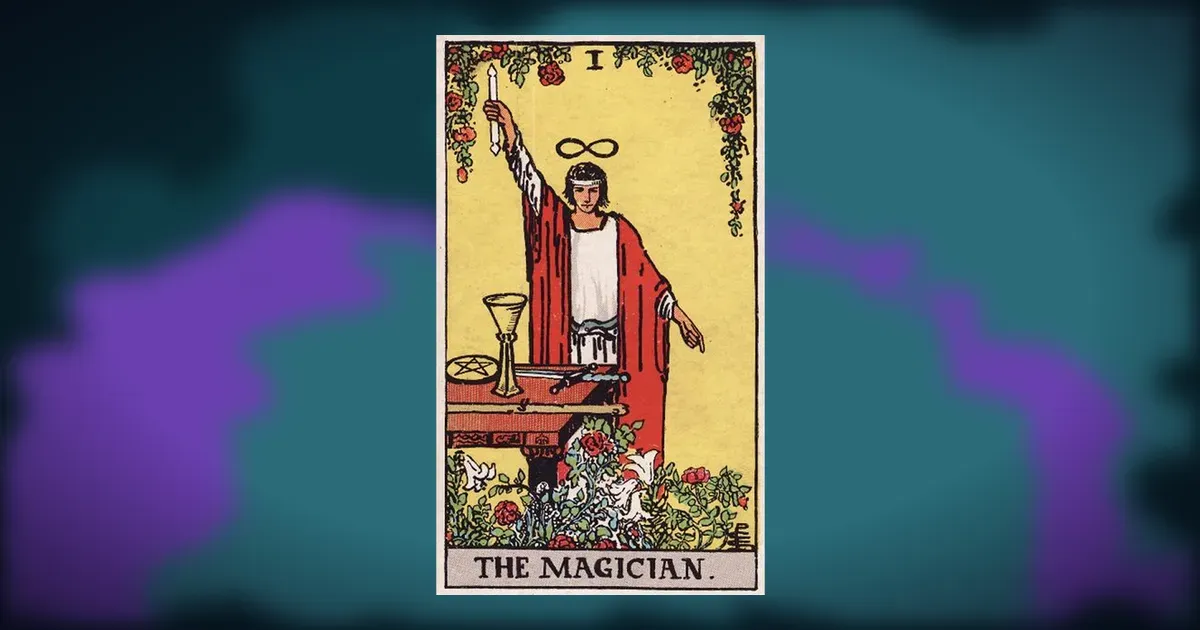
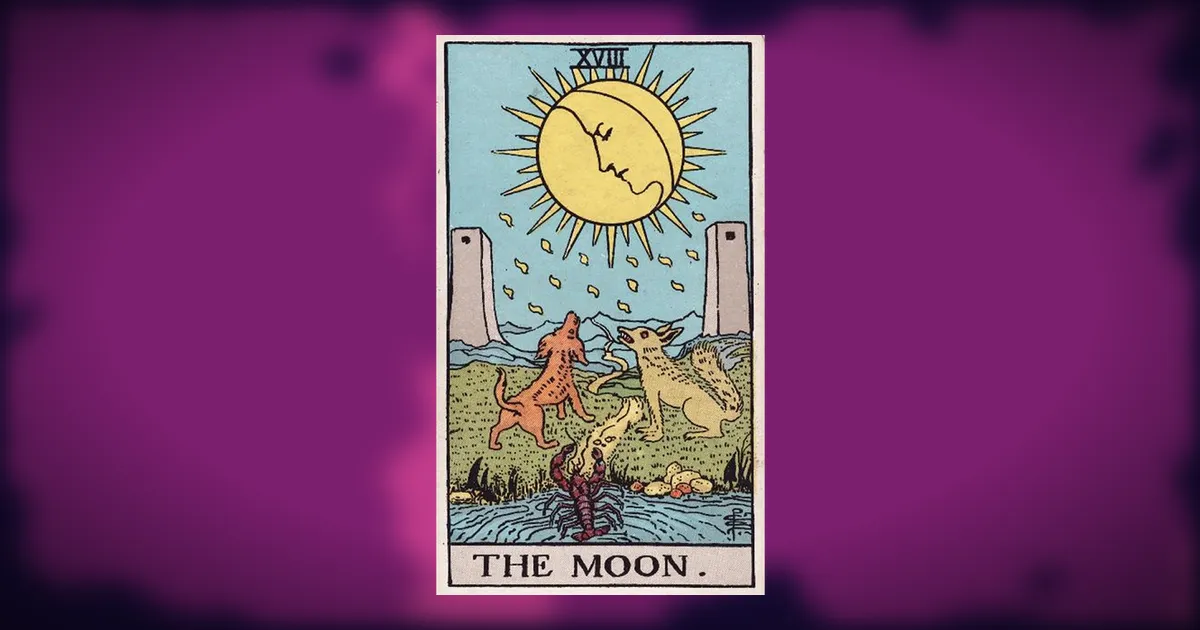
If you'd like to look at a dream's emotional tone through tarot symbolism as well, the images on the cards often echo those in dreams and can be an extra support for reflection. You can look up tarot card meanings and draw the parallels separately; for a dream it's an optional but sometimes useful extra language.
A step-by-step example with a real dream
Let's take a typical dream from start to finish, applying the key-question method.
The dream: “I'm walking down a familiar street, but the buildings look different. I realise I'm late for an important meeting and can't find the way — the streets keep tangling and my phone won't show the map. At some point I meet an old acquaintance who says calmly, ‘You'll make it anyway.' I wake up anxious, but also slightly relieved.”
Step 1 — the emotion. The main feeling is anxiety at losing my bearings and fear of not making it in time. But at the end there's relief. So the dream isn't only about panic, but about a calm somewhere inside that breaks through the anxiety.
Step 2 — the match with life. I've had a similar feeling of “I'm not going to make it and the route keeps tangling” at work these past weeks — deadlines keep moving and there seems to be no plan of action.
Step 3 — the symbols. A familiar street that looks different: a familiar situation that has stopped making sense. A phone with no map: the sense that my usual tools and supports aren't helping right now. The acquaintance saying “you'll make it”: a part of me that knows more than the anxious part of my mind.
Step 4 — controlling the dream. If I could change the dream, I'd stop and ask for directions instead of panicking alone. The conclusion: in waking life too, I should ask for help or check expectations about deadlines with colleagues instead of worrying in silence.
Step 5 — the dream in one sentence. “I'm afraid I won't make it, but part of me already knows I'll manage if I ask for support.” That's the result of the analysis — far more precise and personal than any general dictionary entry for “late for a meeting”.
When a dream is just a dream and there's no meaning to find
It's important not to swing to the other extreme and hunt for deep symbolism where physiologically there isn't any. If you ate heavily right before bed, drank alcohol, went several nights without proper sleep or are under acute stress, your brain may well produce a chaotic, anxious or strange dream simply as a side effect of an overloaded nervous system, with no hidden message at all.
Signs that a dream is probably “just a dream”: it isn't emotionally memorable, it doesn't recur, it doesn't echo anything occupying you in reality, and it's easily forgotten within an hour of waking. In those cases there's no need to strain after symbolism — sometimes a dream really is background noise from a tired brain.
What is worth a closer look: a dream that recurs, one that left a strong emotion lasting all day, or the same image or situation appearing in different variations over weeks. That isn't noise but a signal, worth attending to through a dream journal and the key-question method above.
Work through your dream with Mira
If a dream won't let you go and you can't sort it out on your own, tell it to Mira in the bot. There's a dedicated /dream command for dream interpretation: describe the plot and what you felt, and Mira will help unpack the images through the lens of symbolism and your personal context, and point to what deserves attention in your life right now. It isn't a hard prediction but a tool that helps you see faster what you already feel but haven't yet put into words.
If the language of the cards suits you better, you can also look at the card of the day — sometimes a card drawn in the morning after an anxious dream helps you say more precisely what's troubling you. And the basics of working with the cards are easy to refresh in the article “How to read tarot”.
→ Open the bot and tell Mira your dream
Frequently asked questions
Do dreams come true literally?
Very rarely. Far more often a dream reflects not the future but your current inner state — what you feel but haven't fully recognised while awake. The sense of a “prophetic” dream is usually explained by intuition: the subconscious picked up signals and patterns your waking mind missed.
Why does the same dream recur?
A recurring dream almost always points to an unresolved question or a theme you're avoiding in waking life. Until the situation is understood or closed, the subconscious keeps returning to it in different costumes.
Can you trust ready-made dream dictionaries?
As a starting point, yes; as a final answer, no. Dictionaries give averaged meanings without your personal context or emotions, so they're better used as a prompt for reflection than as a finished decoding.
Why do people have nightmares?
Most often it's accumulated stress, anxiety or an unresolved problem that the psyche is trying to process through a vivid, distressing plot. A nightmare is a signal to look at the source of the tension, not a frightening omen.
Does every single dream need interpreting?
No. If a dream wasn't emotionally memorable and doesn't recur, it's most likely just background processing of the day's impressions, or the result of tiredness, a late dinner or stress. Pay attention first to dreams that leave a strong feeling or that repeat.
What's the fastest way to learn to understand your dreams?
Through a dream journal and the key-question method in this article. Within two or three weeks of regular notes you'll start to see personal patterns and images specific to your own psyche rather than to an averaged dictionary.
What should you do if a dream was very disturbing but made no sense?
Write it down in as much detail as possible right after waking, note the emotion separately from the plot, and run through the key-question method. If you can't work it out alone, describe the dream to Mira in the bot with the /dream command — an outside view sometimes shows what's invisible from within.
Does dream interpretation differ for men and women?
The basic principle is the same — emotion and personal context matter more than plot. What differs isn't the rules of interpretation but the themes that preoccupy a person at a given stage of life, and it's those that surface most often in dreams.