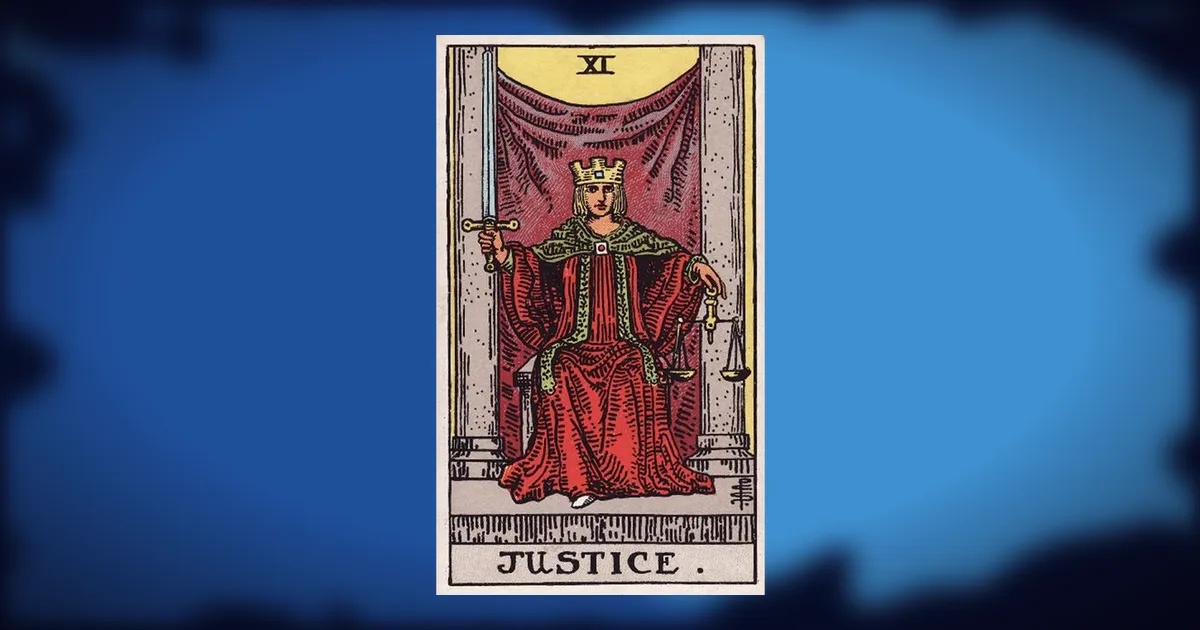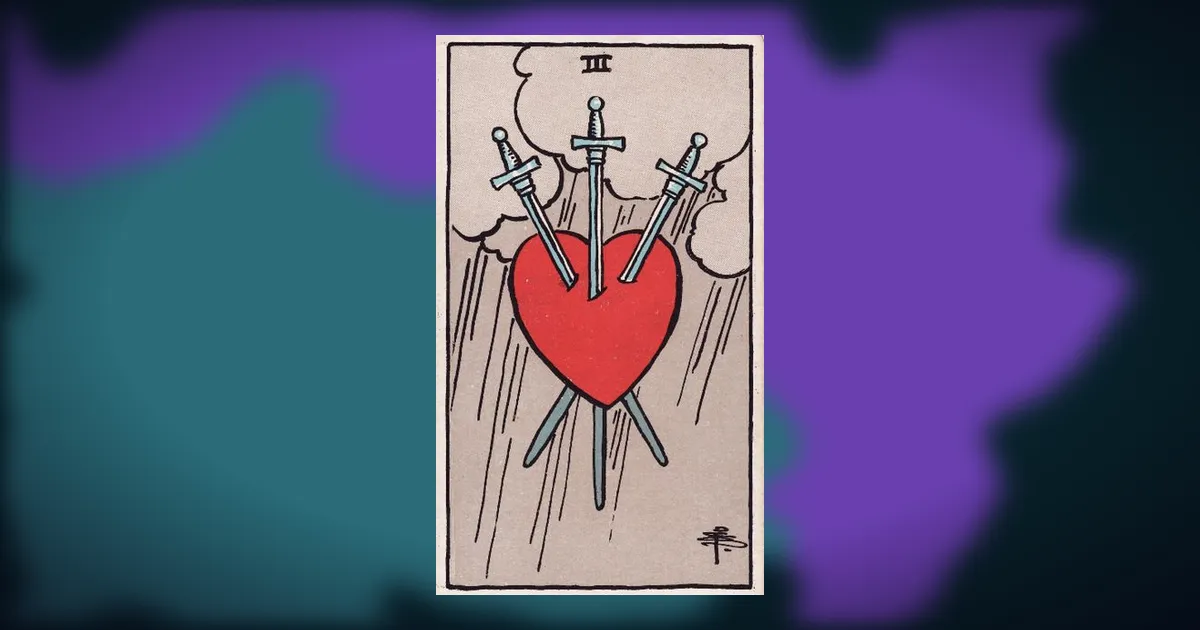

A spread about the future is the most common request cards get and the worst-phrased one. "What's coming?" sounds natural, but the answer almost always comes out vague — and that is not the cards' fault. Let's go through why it happens, how to rephrase the question so it produces something usable, which horizon to choose, and which layouts genuinely work on a forecast.
Why "what's coming" is a bad question
Imagine asking that of someone who knows you well. What would they say? Most likely: "in what sense?" Not out of reluctance, but because the question contains no area, no timeframe and no hint of what actually worries you.
It works the same way with cards. A spread is a structure: each position asks a question and the card answers it. If the original question is empty, the positions fill up with generalities and you get a newspaper horoscope instead of a reading.
A vague question gives a vague answer. That is not mysticism, it is a property of any system that works with wording.
The second layer runs deeper. "What's coming" is a passive question: it assumes the future is already written somewhere and your job is to peek. But the future is a consequence of decisions you have not yet made. Cards don't know what you will decide on Thursday. What they do show well is which script you are currently playing out and where it leads if nothing changes.
There is a third reason, purely practical. The broader the question, the more possible readings each card carries — and the more easily what you want to hear seeps into the interpretation. A narrow question works as a filter: it cuts half the possible meanings before you even look at the card, and what remains has to be read honestly.
What a spread about the future really shows
Three things, and none of them is an "event".
- The active script. The logic currently running in the situation: you are waiting, you are being waited for, you are holding on to the past, you are avoiding a conversation. Usually it is something you already feel but have not put into words.
- The fork. The point where the script can still go differently, and what that would take. This is the most useful part of a reading and the most often skipped.
- The blind spot. The factor you are not accounting for because you are looking at the situation from inside it.
Everything else — "in May a dark-haired man will call" — is no longer working with cards but the promise of an exact answer, which cannot be verified but can be sold.
It helps to keep the difference between a forecast and a prediction in mind. A forecast describes a tendency if conditions hold, and it honestly loses accuracy as the horizon grows — that is how meteorology works, how economics works, and how cards work. A prediction states an event as settled. The first can be used; the second can only be believed, and it is the second that most "accurate" services in this field are selling.
Choosing the horizon
A timeframe is mandatory, and what you ask depends on it.
A week
The narrowest horizon and the most underrated. For a week it makes sense to ask not "what will happen" but "where to focus": which task matters more right now, where energy is being wasted. The answer is verified quickly, and this is the best mode for a beginner — in a month you will collect four confirmed or refuted readings instead of one vague forecast.
A month
The default working horizon. One theme has time to unfold in a month, and the answer can be checked. It maps neatly onto the lunar cycle: from one new moon to the next is 29.5 days — a natural unit for "what do I do next".
Three months
The horizon for processes: changing jobs, renovation, recovering after a breakup. Here the cards show a tendency rather than actions, and reading it requires patience: for a month or two nothing visible may happen. A common mistake is to read the absence of events as "it didn't come true" and re-ask the question two weeks later.
A year
Here it is important to lower your expectations of precision. A yearly spread is useful as a map of themes — what will dominate, where the bottleneck is — but not as a calendar of events. The further the horizon, the more of your own undecided decisions it contains, and the less certainty there is.
A practical rule for the yearly format: one card per quarter plus one overall, read as section headings rather than as scenes. If you come away from a yearly spread with four words — "money", "moving", "health", "people" — that is a normal result, not a poor one.
Five layouts that work
1. Situation — obstacle — what to do
Three cards, the most underrated layout. The first describes what is actually happening, the second what is in the way, the third a concrete action.
Its strength is that it ends in an action rather than a verdict. It suits any question about the coming month. If you are a beginner, start here rather than with the Celtic Cross: ten positions turn into porridge without experience.
A subtlety about the second position: the obstacle is almost never external. If a court card lands there, it usually points to a role you are playing rather than to a specific person standing in your way.
2. Past — present — future, with a caveat
The classic three-card line has one important nuance: the third card is not a prediction but a continuation. It answers "where does this end up if nothing changes", not "what will definitely happen".
Reading it as a verdict is the most common beginner mistake. Reading it as a weather forecast is correct: if rain is visible, you take an umbrella, you don't cancel your life.
The first position works differently than it seems, too. "The past" is not your biography but the piece of the past still shaping the situation. If something lands there with no obvious link to your history, that is a hint the cause is not where you are looking for it.
3. The fork: path A — path B — what is common
A layout for choosing rather than waiting. Two cards describe where each option leads, the third what stays with you either way.
That third position is the key one and usually the most honest: it often reveals that the question was never about choosing between A and B, but about what you are avoiding in both.
One important limitation: both paths must be real. "Leave or stay" works; "marry him or meet someone else" does not, because the second option is not your decision but a turn of events.
4. Four cards by month
For a quarter horizon: one card per month plus a summary. The strength of this layout is that it makes dynamics visible — where the rise is, where the dip is, where the turning point sits. It must be read as a sequence, not card by card: three calm cards and the Tower in the third month is not a March catastrophe but a story about what accumulated over the two months before it.
5. One card for "what am I not seeing"
The shortest and most underrated layout for the future. One card, one question: what am I failing to account for here. It works as an addition to any of the layouts above whenever the answer felt a little too convenient.
Phrasing the question: before and after
The difference between a useless and a working question is a timeframe, an area, and the stance "I act" rather than "things happen to me".
- "What's coming?" → "What will dominate my work in the coming month?"
- "Will we be together?" → "What defines our relationship right now, and what can I change before the end of summer?"
- "When will I have money?" → "What is stopping my income from growing right now?"
- "Should I quit?" → "Where does leaving lead, and where does staying another three months lead?"
- "Will he come back?" → "What do I do right now with the fact that he is gone?"
Notice that the word "when" disappeared from every rephrasing. That is deliberate — questions about timing are what cards handle worst, and anyone promising you an exact date is naming it out of thin air. If time shows up in a reading at all, it arrives as "soon", "not in this cycle", "after such-and-such happens" — tied to an event, not to a number on a calendar.
A worked example
So that this doesn't stay theoretical, take a typical case. The question: "What defines my work in the coming month and what can I do about it?" Layout: situation, obstacle, action.
Situation: Eight of Pentacles. Craft, patient work, accumulating skill. Read literally: you are working hard and working well. There is nothing dramatic in the situation itself.
Obstacle: Four of Pentacles. Holding, refusing to let go. In the context of this question that is usually not about money but about keeping tasks to yourself instead of delegating — or not showing results because "it isn't ready yet".
Action: Three of Wands. Looking past the horizon, ships already sent. The advice is specific: show what you have made. Not finish it — show it.
Notice that not one card described an event. The spread gave a script (a lot of work with no external result), a cause (you are not releasing what you make) and an action (show it). Verifiable in a month: you either showed it or you didn't, and it either changed something or it didn't.
What to do if you don't like the answer
This deserves its own section, because it is where most beginners break.
First: an unpleasant answer is not a verdict but a description of your current trajectory. The whole point of a spread about the future is that the trajectory becomes visible early enough to change. A reading that showed you something uncomfortable is more useful than one that reassured you.
Second: don't re-ask. If you want to ask again "just in case" after an answer, you are looking for permission rather than information. Permission you can give yourself without cards.
Third: separate anxiety from information. Write the conclusion down in one line and come back to it after a day. If the line still looks meaningful in the morning, it is information. If it fell apart, then what you were reading last night was your own state, not the cards.
What not to do
- Don't redo the same question several times in a row. If you are asking a third time this evening, you already have the answer — just not the one you wanted. The one-question rule applies here too.
- Don't ask about other people's decisions. "What does he think" and "what will he do" are questions whose answers sit with him, not in the deck.
- Don't cast a yearly spread every week. A horizon needs time to unfold.
- Don't mix several questions into one spread. "What about work and also my personal life" is two spreads, not one; cards asked this way start answering both at once and end up answering neither.
- Don't believe in verdicts. If a reading left you frightened, it was done badly. Fear is not the result of working with cards, it is the absence of it.
How to tell the reading was good
A simple test: afterwards you should have one concrete action for the coming days. Not a mood, not anxiety, not a sense of mystery — an action.
If there isn't one, the question was passive and worth asking again differently. A good reading ends with "right, I know what to do", not with "interesting, we'll see".
The second test is delayed. Write the conclusion down with the date and set a reminder for the timeframe you asked about. Reread it a month later. That is the only honest way to find out whether the method works for you, and it also cures the main failure mode: a reading is forgotten within three days, while the feeling that "it sort of came true" gets assembled after the fact.
Common questions
Can you read about the future for yourself?
Yes. The difficulty is not a prohibition but honesty: reading for yourself, you want to see the convenient version. Writing the interpretation down before you start thinking it over helps.
How often can I ask about the same thing?
No more often than the circumstances change. If nothing has happened since last time, a new spread will answer the same thing — and you will either get confirmation or start hunting for a different interpretation until you find a pleasant one.
What if the cards contradict each other?
Usually that is not a contradiction but different layers: one card about your feelings, another about circumstances. Try reading them as "inside it's like this, outside it's like that" — the contradiction normally disappears.
Do reversed cards count in a future spread?
If you work with them, yes, and in a forecast they are especially useful. A reversed position here usually means not "the opposite" but "slower, weaker, against resistance". Three of Wands upright — the ships have sailed; reversed — you are still standing on the shore watching. For a horizon that is valuable information: it answers the question of tempo, which upright cards do not. More in the guide to reversed cards.
What if the situation changes before the timeframe is up?
Lay it out again. A spread describes a trajectory under stable conditions, and once conditions change it is no longer about your situation. That is the one legitimate reason to ask the same question again: not because the answer displeased you, but because the input changed.
Does an online spread about the future work?
The mechanics are identical: a question, positions, interpretation. The only difference is who shuffles. What matters far more is how precisely the question is posed and whether you are told where the conclusion came from.
You can lay out a spread for the coming month right here: pick a layout, ask your question by the rules above, and get a reading by position instead of generalities. The first one is free.